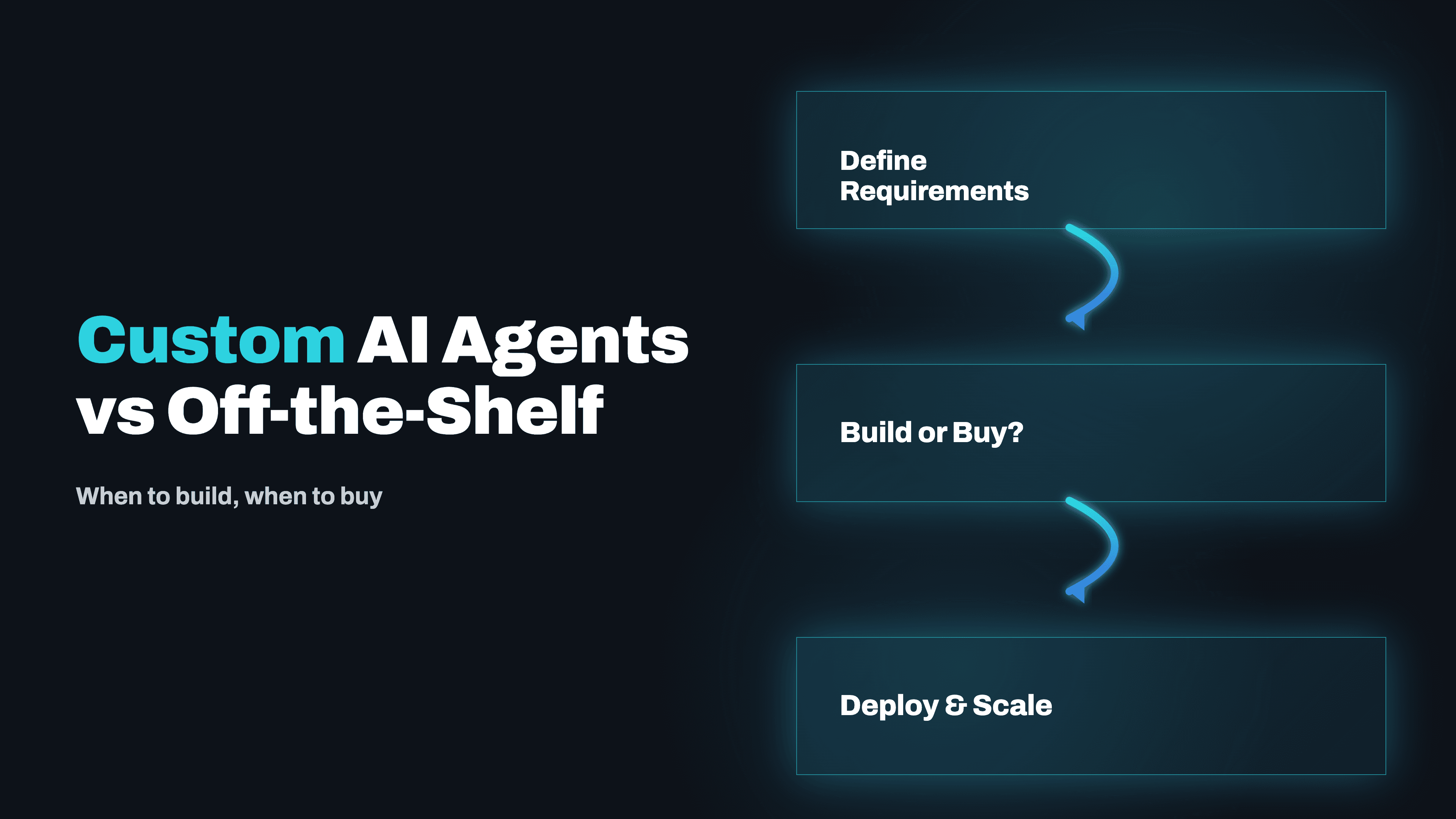
Every vendor will tell you their product handles your use case. Some of them are right. Here's an honest framework for deciding when a custom AI agent is worth the investment, and when buying an existing tool is the smarter call.
There are now hundreds of AI tools that promise to automate your sales outreach, customer support, document processing, or internal knowledge retrieval. Some of them are excellent. But we also regularly talk to companies that bought three different AI platforms, got partial results from each, and are now asking whether they should have just built something custom from the start. The answer isn't always yes, but the decision framework most companies use is wrong.
The Off-the-Shelf Case: It's Stronger Than You Think
If your use case is well-defined, high-volume, and matches a problem that thousands of other companies have: buy. Customer support chat with FAQ deflection? Intercom's AI features or Freshdesk's Freddy will outperform anything you build in the next six months, because they've been trained on millions of support interactions and have integrations your team would spend months building. Document summarization for legal review? Tools like Clio or Harvey have domain-specific fine-tuning and compliance certifications that take years to replicate.
The math is simple: if a $500/month SaaS tool solves 80% of your problem, the custom build needs to solve the remaining 20% badly enough to justify $40,000–$120,000 in development and ongoing maintenance.
When Custom Wins: The Three Real Reasons
Custom AI agents make sense in three specific scenarios:
- ✓Proprietary data and context: your business logic is complex enough, or your data specialized enough, that a general-purpose tool can't be prompted or fine-tuned to match it. A medical billing agent that knows your payer mix, your denial patterns, and your EHR's quirks will outperform any generic tool.
- ✓Deep system integration: you need the AI to read from and write to internal systems in ways that SaaS tools don't support.
- ✓Multi-step reasoning chains: the task requires the agent to plan, execute multiple sub-tasks, evaluate intermediate results, and recover from failures. Off-the-shelf tools are generally single-turn; end-to-end workflows require custom orchestration.
The Real Cost of a Custom AI Agent
A production-grade custom AI agent is not a weekend project. A well-scoped single-domain agent, say, an autonomous prior authorization agent for a medical practice, takes 6–10 weeks to build properly. That includes prompt engineering, tool definition, output parsing, error handling, human escalation logic, logging, and testing against real edge cases.
Cost range: $25,000–$60,000 depending on complexity and integrations. Ongoing model costs: $200–$800/month for a mid-volume agent. The best ROI comes when the automation replaces a task costing $8,000–$15,000/month in staff time.
The LLM Choice Matters More Than Most Realize
Most off-the-shelf AI tools don't let you choose the underlying model or configure its behavior at the system prompt level. For complex reasoning tasks, the difference between GPT-4o, Claude Sonnet, and Gemini 1.5 Pro can be significant, not in raw intelligence, but in instruction-following reliability, output format consistency, and behavior on long contexts. We've seen agents that worked well in demo environments fail in production because the underlying model was swapped by the vendor. When you build custom, you control the model, the prompt, the temperature, and the fallback behavior.
The Hybrid Approach Most Companies Should Actually Use
The best answer for most organizations is neither pure custom nor pure off-the-shelf. Use existing SaaS tools for commodity tasks: email marketing, basic CRM sync, meeting scheduling. Build custom agents for the high-value, differentiated workflows where your specific context matters. Connect them via API. This avoids building everything from scratch (expensive, slow) and buying tools that don't quite fit (expensive differently, and frustrating).
Due Diligence Before You Build: The Questions to Ask
Before committing to a custom AI agent build, three questions separate projects that succeed from those that become expensive experiments:
- ✓Do you have labeled evaluation data? An agent that processes invoices needs a held-out set of invoices with known correct outputs. Without this, you cannot tell if the agent is reliable.
- ✓Who owns the escalation path? Every custom agent needs a defined human review process for cases outside its confidence threshold. If no one is assigned to review flagged cases, the agent will either fail silently or create a new manual queue that is worse than what it replaced.
- ✓What is the LLM maintenance plan? Model providers update and deprecate models, and system prompt behavior changes with new releases. Someone needs to be responsible for catching these changes before they affect production outputs.
The Vendor Lock-In Risk in Off-the-Shelf AI Tools
One underweighted consideration in the build-versus-buy decision is vendor lock-in risk: the risk that the vendor changes their pricing, discontinues a feature, or gets acquired and pivots the product after your team has built significant workflow dependency on it. This is not hypothetical. Several well-regarded AI tools adopted in 2023–2024 have since restructured pricing in ways that dramatically changed the economics for high-usage customers.
When you build a custom AI agent, the core logic lives in your code repository, your model prompts are version-controlled, and your integrations are direct to the underlying APIs. If OpenAI changes GPT-4o pricing, you can evaluate switching to Claude without rebuilding your product. Understanding this risk as part of the total cost of ownership changes the build-versus-buy math in favor of custom for any workflow that is genuinely strategic to your operations.
Kodesinc helps companies figure out exactly where that line sits, before they've committed to a build or bought the wrong tool. We do a workflow audit that maps your current processes, identifies what's genuinely automatable with existing tools, and scopes what actually needs custom development. Book a free workflow audit, it's the right starting point if you're evaluating AI investments in 2026.
Related Articles
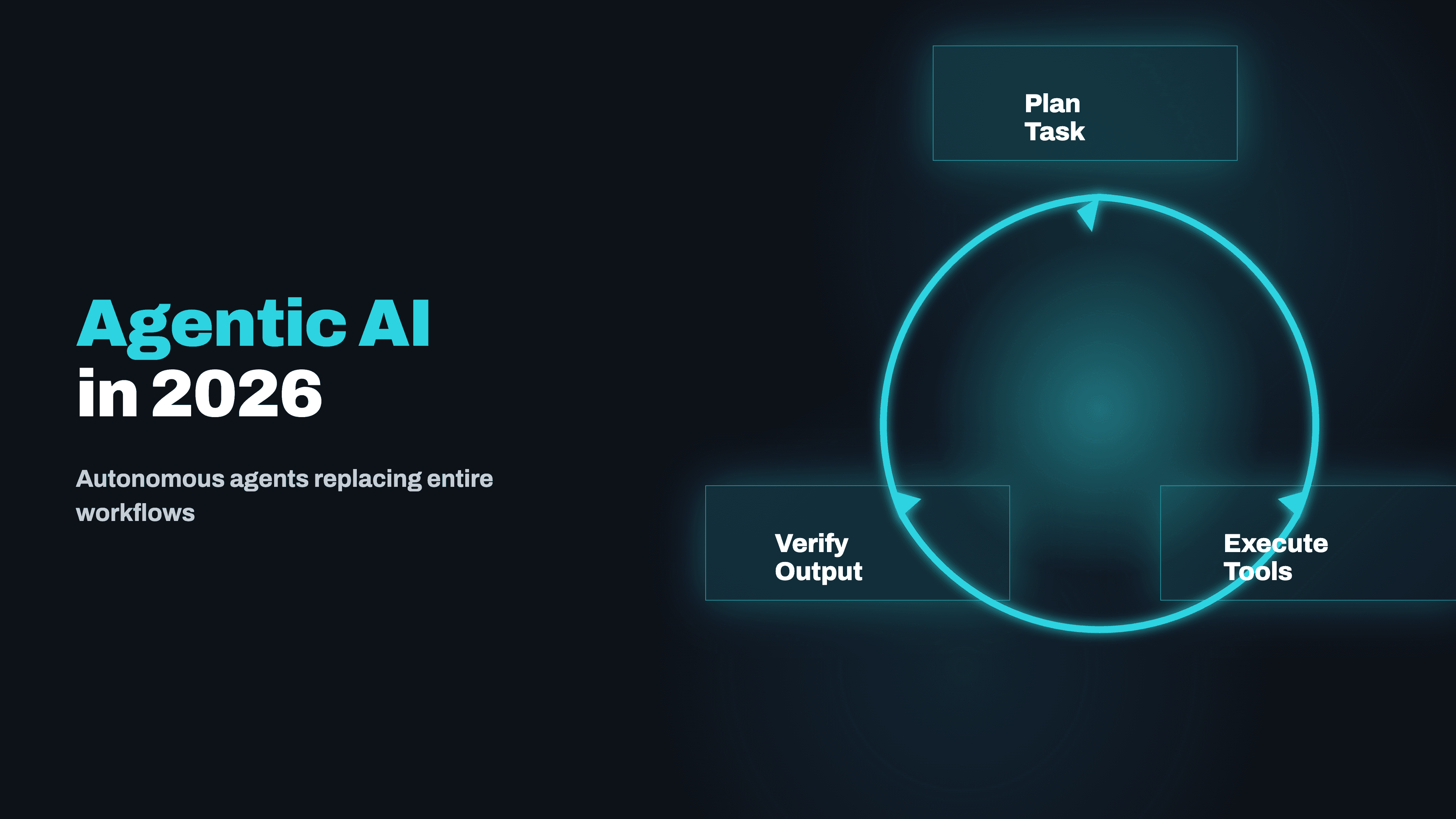
Agentic AI in 2026: How Autonomous Agents Are Replacing Entire Workflows
Agentic AI is the most over-used phrase in tech right now, and also the most consequential shift in how work gets done. Here's a ground-level view of what autonomous AI agents actually replace, what they can't, and what a real deployment looks like in 2026.
Read →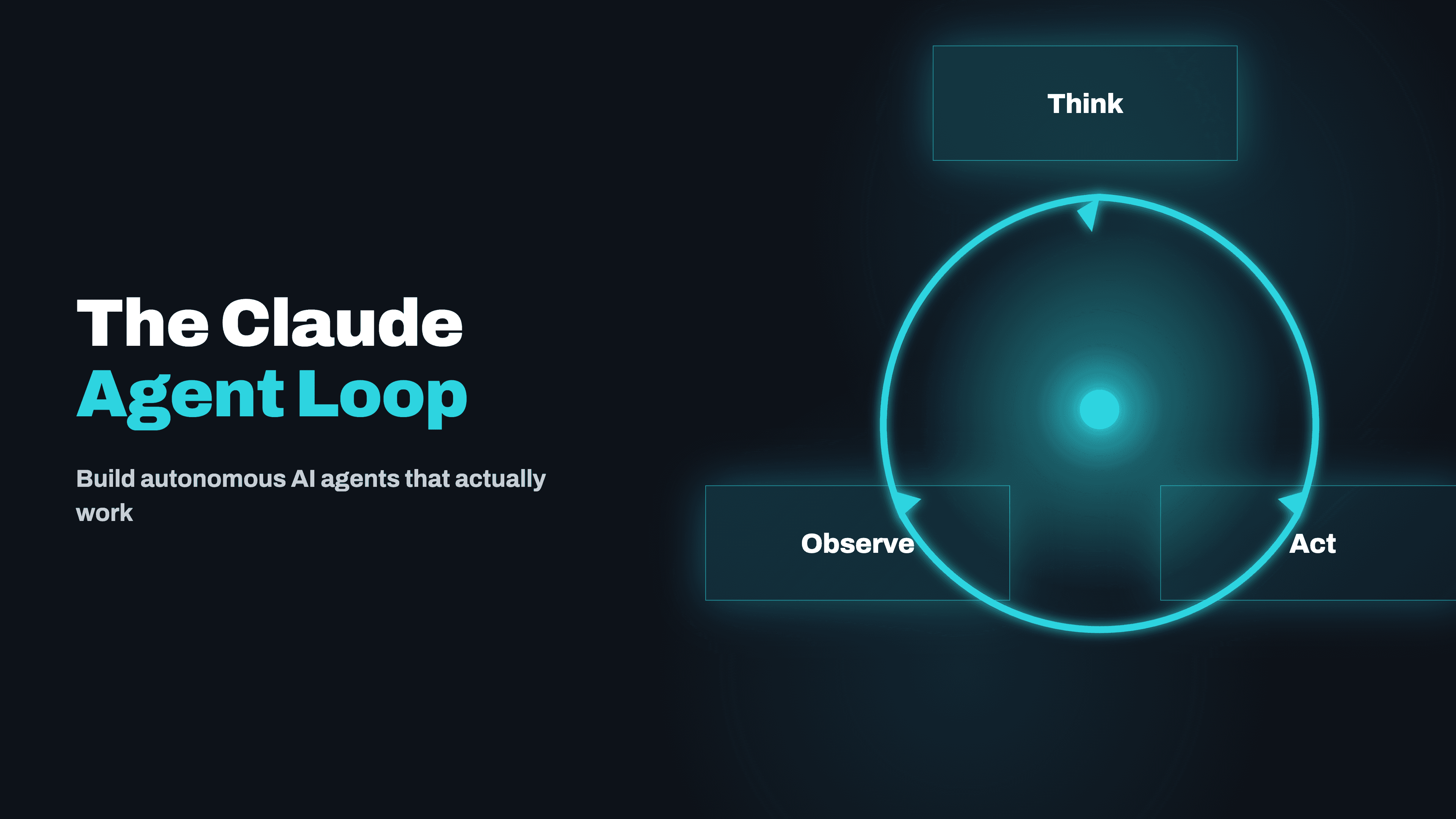
The Claude Agent Loop Explained: How to Build Autonomous AI Agents That Actually Work
Claude's agent loop is one of the most powerful patterns in applied AI right now, and one of the most misunderstood. Here's how it actually works, what makes agents built on it reliable, and how to avoid the failure modes that kill most agentic deployments.
Read →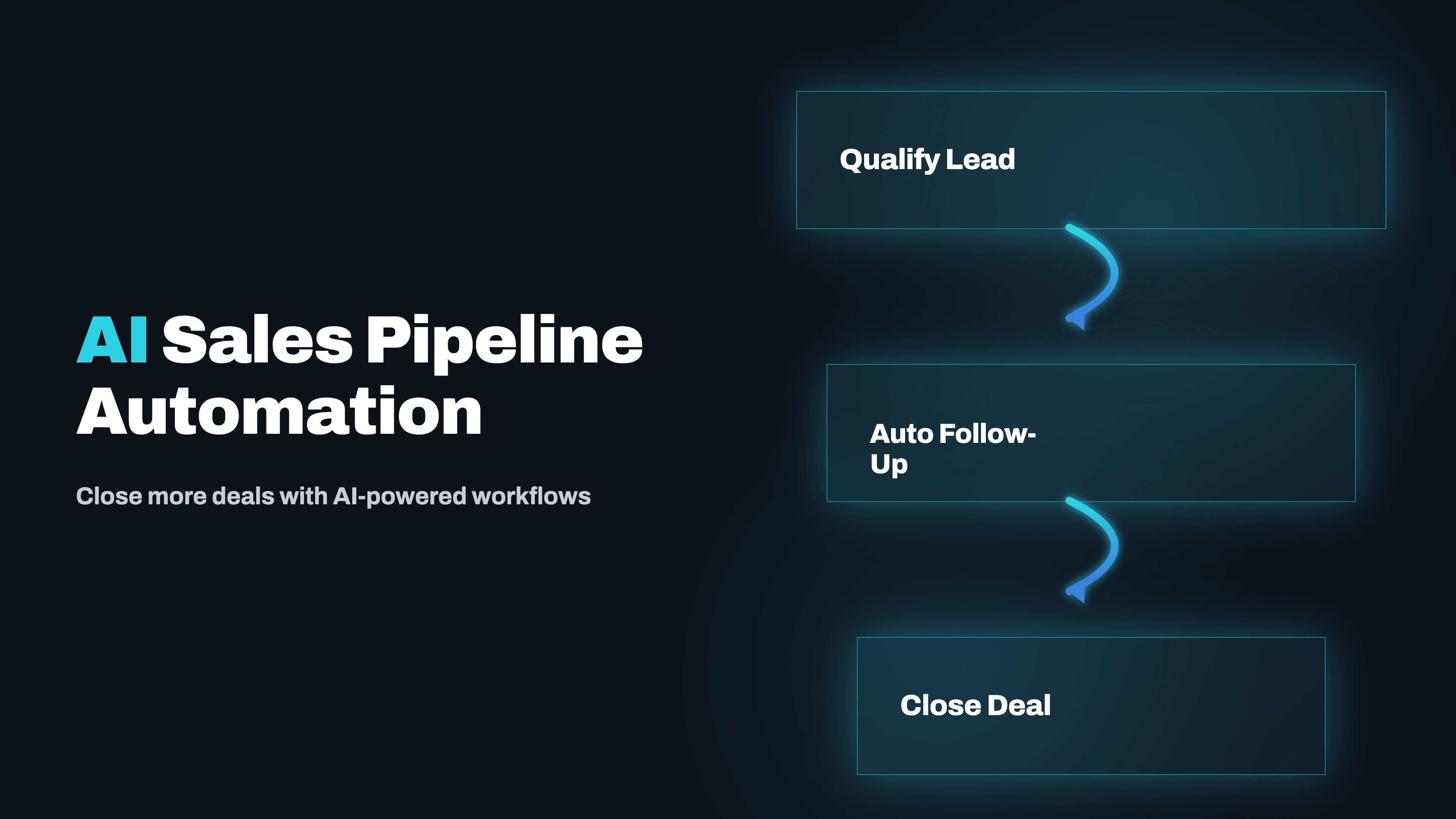
How AI Is Automating the Entire Sales Pipeline in 2026 (Not Just Lead Gen)
AI in sales used to mean a chatbot on your pricing page. In 2026, it means autonomous agents that qualify leads, personalize outreach sequences, draft proposals, handle follow-ups, and keep your CRM clean, without a rep touching it. Here's what's actually deployed and working.
Read →Want to implement this for your business?
Book a free strategy call. No commitment, no pitch deck — just a real conversation about your workflow.
Discuss Your Project →