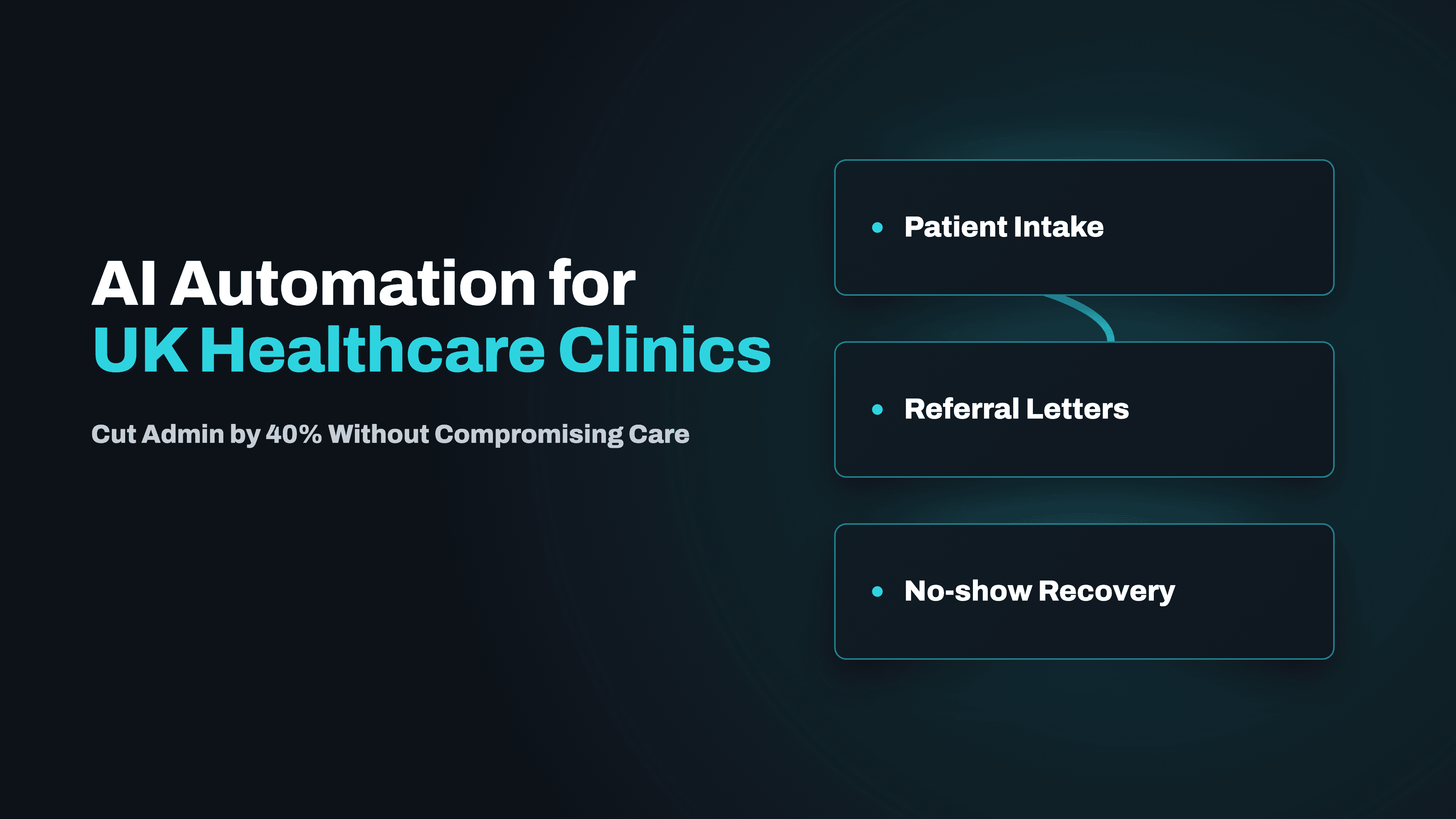
UK healthcare providers spend 30–40% of clinical time on administrative tasks. AI automation changes that equation — but implementation in healthcare requires careful attention to CQC regulations, UK GDPR, and NHS Digital standards.
UK healthcare providers spend an estimated 30–40% of clinical time on administrative tasks. For NHS GP practices and private clinics alike, that means doctors, nurses, and admin staff stuck in paperwork loops instead of treating patients.
AI automation changes that equation — but implementation in healthcare requires more care than most industries. UK clinics operate under CQC regulations, UK GDPR, and NHS Digital data standards. The wrong automation can create compliance risk as fast as it saves time.
The UK Healthcare Admin Problem
The NHS Long Term Workforce Plan acknowledges what clinic staff already know: administrative burden is one of the biggest drivers of staff burnout and patient wait times. Private clinics face a parallel problem — growing patient volumes with flat headcount.
The typical UK clinic admin workflow involves:
- ✓Manual appointment scheduling and reminder calls
- ✓Paper-based or siloed patient intake forms
- ✓CQC audit trail documentation
- ✓GP referral letters drafted from scratch per patient
- ✓Prescription request processing
- ✓NHS payment reconciliation across PMS systems like EMIS or SystmOne
Each of these is a candidate for automation. None of them require a clinician's judgment. Yet most clinics still handle them manually.
What AI Can Automate in a UK Clinic
Patient Intake and Pre-appointment Data Collection
Before a patient arrives, an AI pipeline can send a branded digital intake form via SMS or email, parse the responses and populate the clinic's PMS automatically, flag incomplete forms or high-risk responses for staff review, and send appointment reminders at 48 hours and 2 hours before the visit.
The result: front desk staff spend zero time on phone chasing, and clinicians walk into appointments with complete patient data already loaded.
Referral Letter Generation
A GP or specialist writes roughly the same referral letter structure for each referral type. AI can draft referral letters from structured patient data — pulling diagnosis codes, medication lists, and consultation notes — leaving the clinician to review and sign off rather than write from scratch.
For a busy GP practice doing 15–20 referrals a week, automated drafting saves 45–90 minutes of clinical time per day.
CQC Documentation and Audit Trails
CQC inspections require evidence of consistent processes. AI pipelines can automatically generate timestamped logs of patient communications, consent collection, and staff actions — building an audit trail passively as the clinic operates. This reduces the scramble before inspections and makes evidence retrieval straightforward.
Appointment No-show Recovery
UK clinics lose significant revenue to DNAs (did not attends). An automated pipeline can detect a missed appointment within 5 minutes of the slot time, send an automated rebooking SMS with a direct booking link, offer the vacant slot to a waiting list patient simultaneously, and log the DNA for NHS reporting requirements.
Clinics using automated DNA recovery typically recapture 20–35% of lost slots.
NHS Payment and Invoice Reconciliation
For practices billing NHS commissioners or processing private invoices, reconciliation is time-consuming. AI can match payment records to invoices, flag discrepancies, and generate exception reports — reducing the monthly reconciliation process from days to hours.
UK Compliance Considerations
Healthcare automation in the UK operates under stricter rules than most industries.
- ✓UK GDPR and patient data. Any AI pipeline handling patient data must comply with UK GDPR. Patient data cannot be processed by third-party AI models without appropriate data processing agreements. For most UK clinics, this means using self-hosted or private-deployment AI tools rather than consumer AI services.
- ✓CQC Key Lines of Enquiry. CQC inspects whether services are safe, effective, caring, responsive, and well-led. Automation that speeds up care without introducing risk scores well. Automation that removes human judgment from clinical decisions does not.
- ✓NHS Digital standards. Clinics integrated with NHS systems must ensure any automation that reads or writes to those systems is compliant with NHS Digital API standards. Integration without API approval can create both compliance and technical risk.
A reputable AI automation agency will ask about your PMS system, data hosting setup, and CQC registration status before scoping any automation, not after.
Where to Start: Highest ROI Automations First
Not every clinic should automate everything at once. The highest-ROI starting points for most UK healthcare providers are:
- ✓Appointment reminders and confirmation — low complexity, immediate impact on DNA rates, no clinical data involved
- ✓Digital intake form collection — eliminates front desk phone time, improves data quality
- ✓Referral letter drafting — saves clinical time, high value per hour recovered
- ✓Post-appointment follow-up messages — patient satisfaction, review collection, rebooking
These four automations can typically be live within 4–6 weeks and deliver measurable results within the first month.
What to Look For in a UK Healthcare Automation Partner
Not every AI agency understands healthcare. When evaluating partners, ask:
- ✓Do they understand NHS systems? An agency that has never integrated with EMIS or SystmOne will underestimate the complexity.
- ✓Can they self-host AI models? UK GDPR often requires data to stay within UK borders. An agency relying on US-based AI APIs may create compliance exposure.
- ✓Do they offer a fixed price? Healthcare projects have compliance overhead. Time-and-materials billing leaves you exposed to spiralling costs.
- ✓What does handover look like? You should receive full documentation and source access. Vendor lock-in in healthcare IT is a significant risk.
- ✓Have they worked with CQC-registered providers before? The audit trail requirements are non-negotiable.
The first step is a workflow audit — mapping every administrative process in your clinic that doesn't require clinical judgment. Most clinics are surprised by how much of their day falls into that category. Book a free discovery call and we'll map the automations most likely to deliver ROI for your specific setup before any development begins.
Related Articles
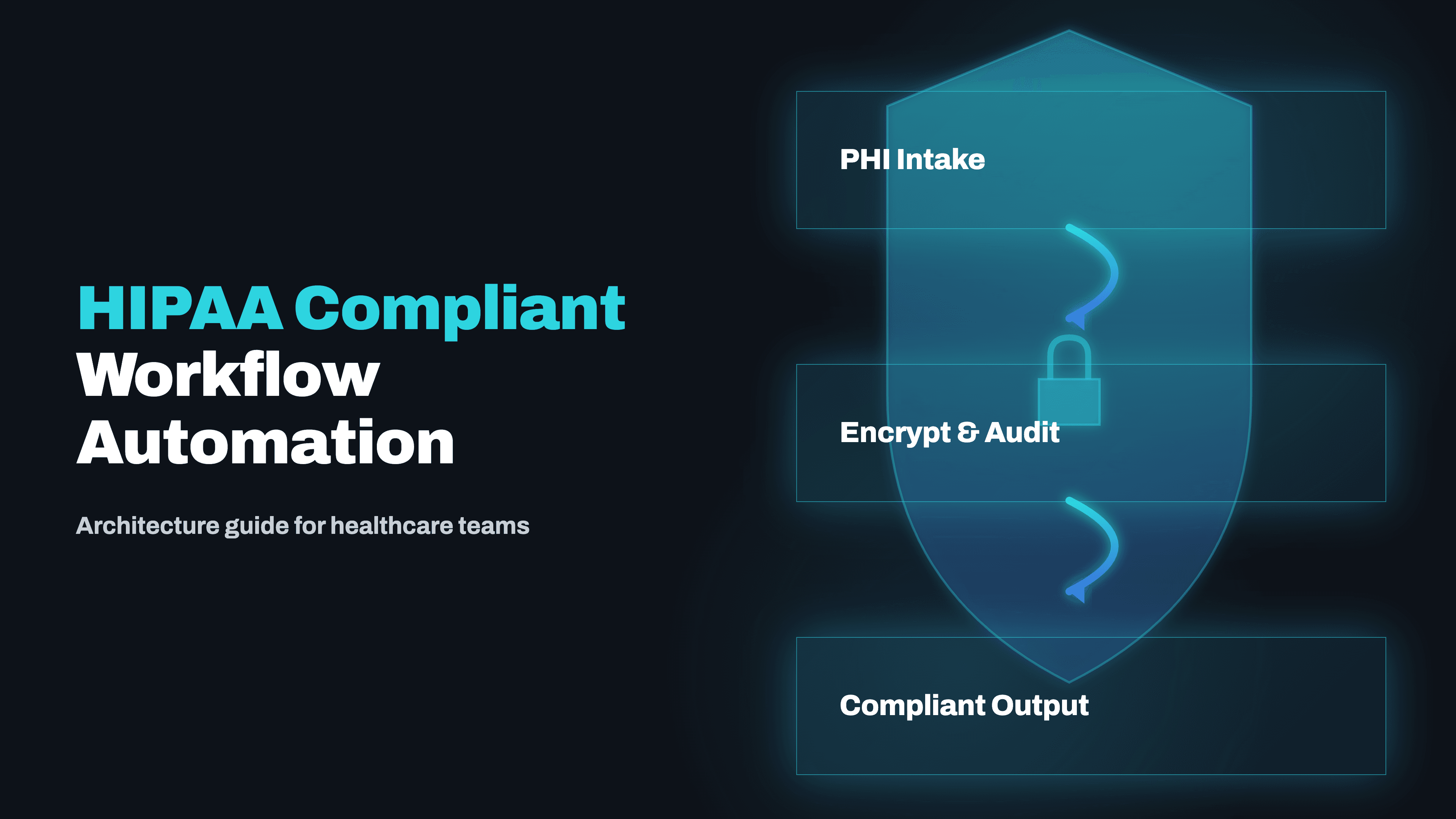
HIPAA Compliant Workflow Automation: Architecture Guide for Healthcare
Most healthcare workflow automation fails HIPAA compliance not because the tool is wrong but because the architecture is wrong. Here is what HIPAA actually requires of automated systems, which platforms can be made compliant, and how to design workflows that your DPO and legal team can sign off on.
Read →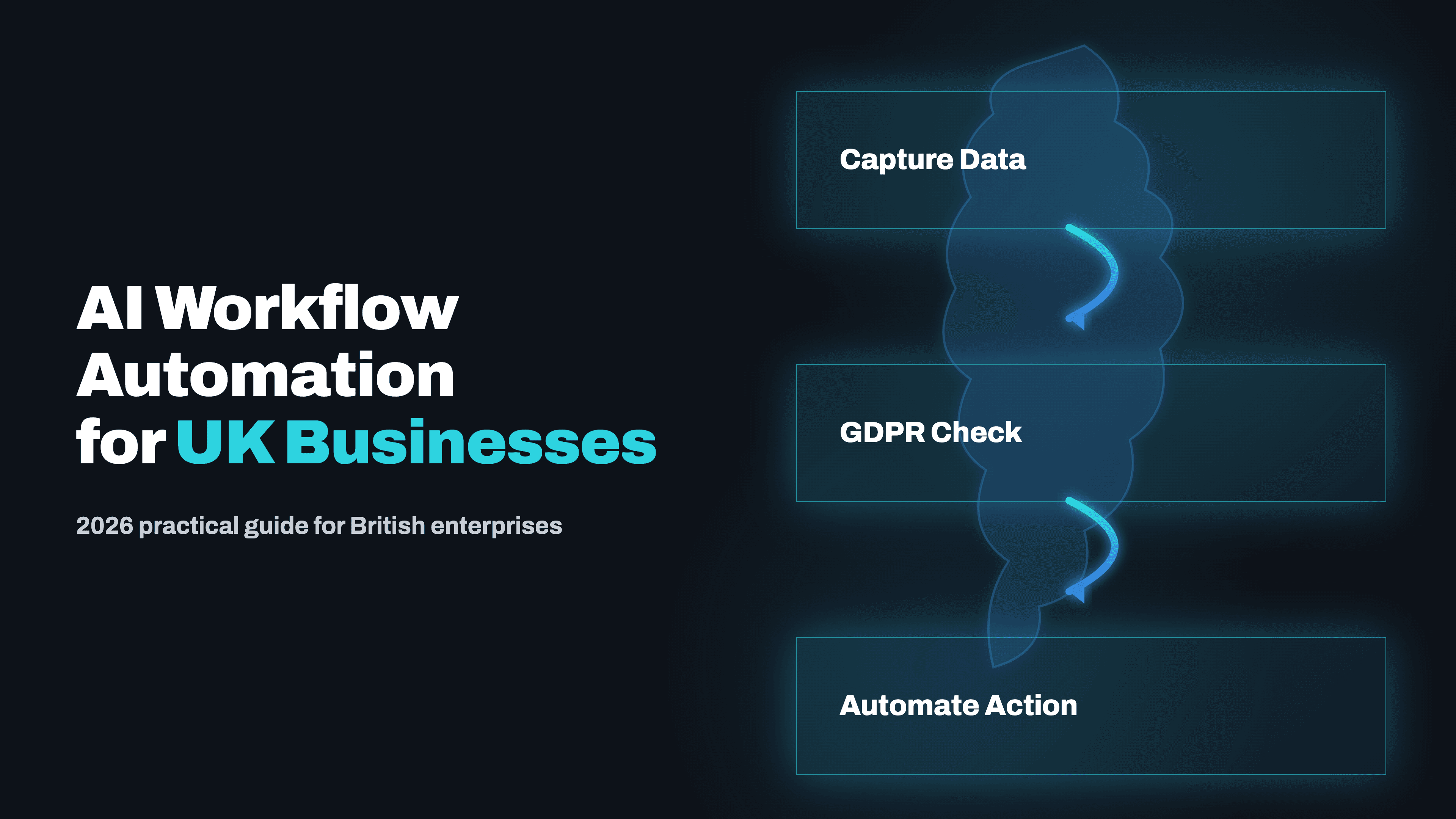
AI Workflow Automation for UK Businesses: 2026 Guide
UK businesses face specific pressures in 2026, rising labour costs post-NLW increase, GDPR compliance requirements, and a skills gap in technical talent. AI workflow automation is the practical answer. Here's what's working, what's compliant, and how Kodesinc builds it.
Read →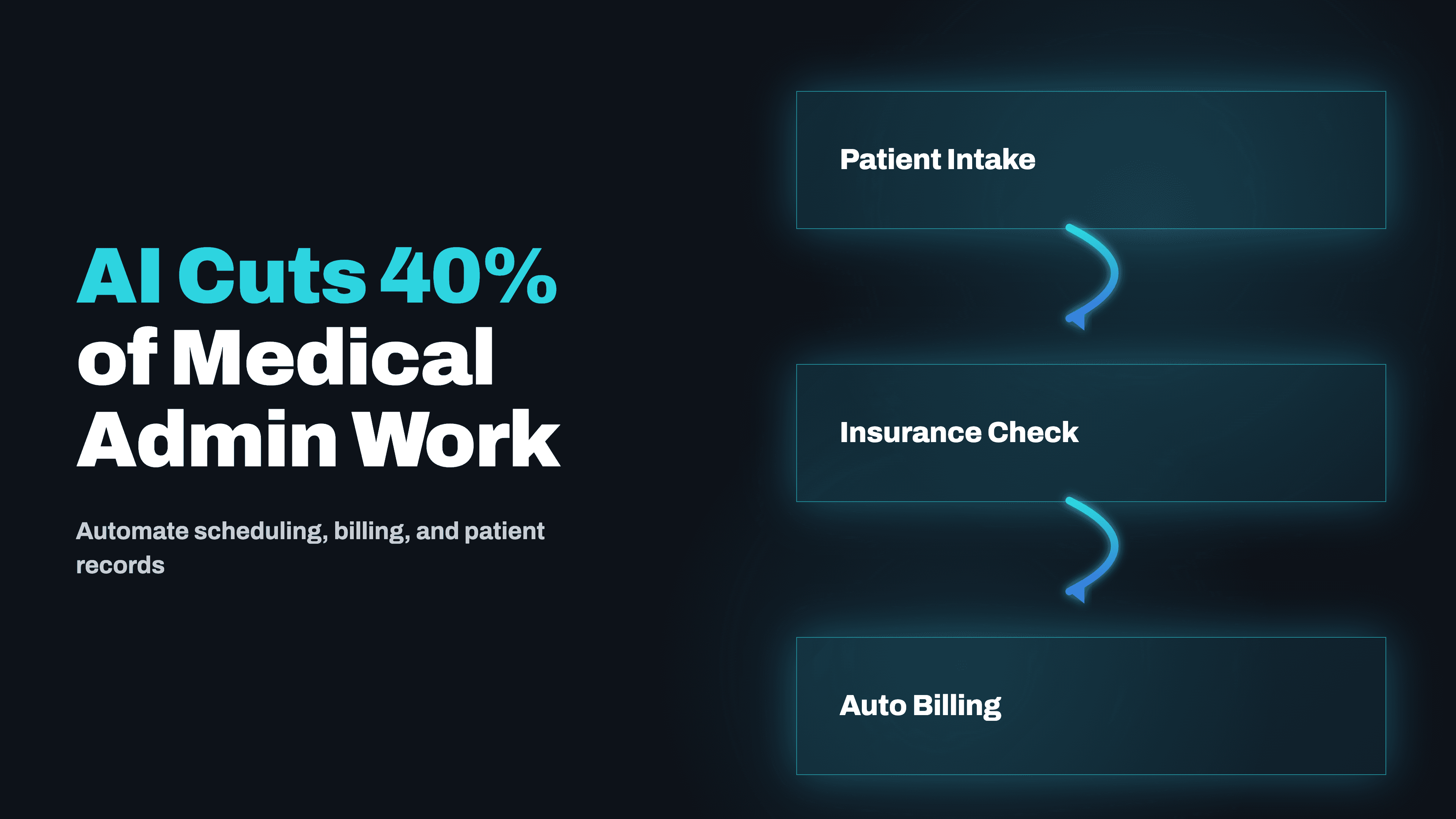
How AI Automation Cuts 40% of Admin Work in Medical Practices
Administrative overhead is the silent killer of medical practice profitability. Here's how AI automation is reclaiming hours every day across patient intake, prior auth, appointment reminders, and billing follow-ups.
Read →
Custom AI Agents vs Off-the-Shelf: When to Build, When to Buy
Every vendor will tell you their product handles your use case. Some of them are right. Here's an honest framework for deciding when a custom AI agent is worth the investment, and when buying an existing tool is the smarter call.
Read →Want to implement this for your business?
Book a free strategy call. No commitment, no pitch deck — just a real conversation about your workflow.
Discuss Your Project →