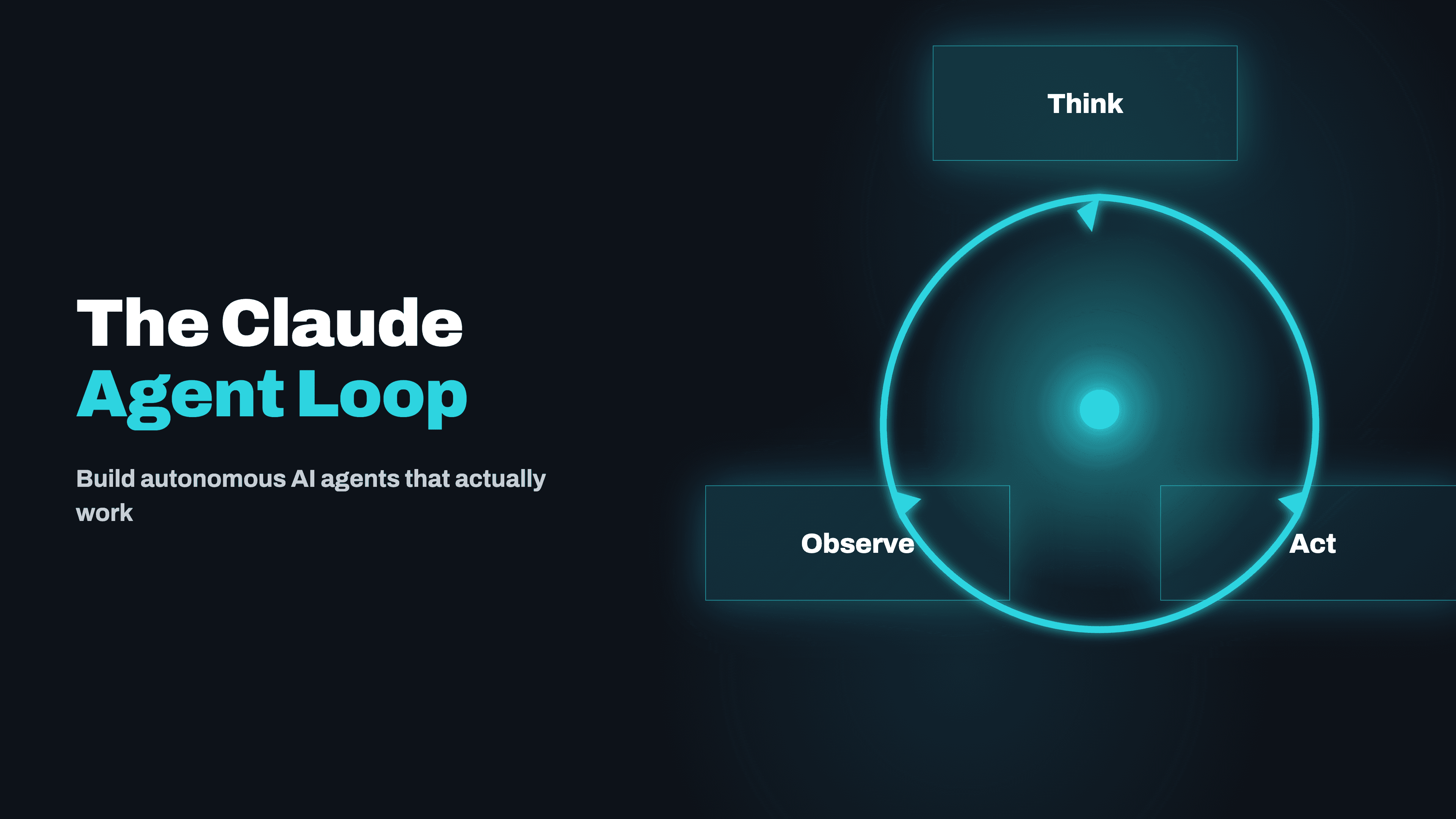
Claude's agent loop is one of the most powerful patterns in applied AI right now, and one of the most misunderstood. Here's how it actually works, what makes agents built on it reliable, and how to avoid the failure modes that kill most agentic deployments.
Claude's agent loop is the pattern that makes Anthropic's models genuinely useful for autonomous work, not just answering questions, but completing multi-step tasks, calling tools, recovering from failures, and producing a finished outcome without a human in the middle. If you're evaluating Claude for building AI agents in production, understanding exactly how this loop works is the difference between a system that's reliable and one that fails in ways you didn't anticipate.
What the Claude Agent Loop Actually Is
The agent loop is the core execution pattern that enables Claude to behave like an autonomous agent rather than a single-turn assistant. Claude receives a task and a set of available tools. It reasons about what to do, decides to call a tool, receives the tool result, and then decides what to do next, all in a tight loop until the task is complete or Claude determines it cannot proceed.
Each iteration, Claude has full context of what it's done so far, what each tool returned, and what still needs to happen. This is fundamentally different from a single LLM call: the model is actively planning, observing the results of its actions, and adapting. The loop continues until Claude produces a final response, meaning all tool calls have been resolved, or until the developer sets a hard stop on iterations.
Tool Use: The Engine of the Loop
Tools are what give the agent loop its power. In the Claude API, you define tools as structured JSON schemas: a name, a description, and a set of input parameters. Claude reads these definitions and decides when and how to call them based on what the task requires, you don't route the decision. This is different from a rule-based system where you explicitly specify 'if condition A, call tool B'. Claude handles that routing dynamically.
We've built agents with tool sets ranging from 3 simple tools (read file, search database, send email) to 40+ tools covering an entire enterprise API surface. The quality of your tool descriptions matters enormously, ambiguous descriptions lead to incorrect tool calls, and incorrect tool calls compound across iterations.
The Memory Problem Every Claude Agent Faces
The agent loop runs within a single conversation context window. As the loop iterates and tool results accumulate, the context grows. A complex task with 20 tool calls can easily push 50,000–100,000 tokens before it completes. Claude's 200,000-token context window is generous, but inference cost scales with context length.
The practical solution for production agents is aggressive context management: summarize completed sub-tasks rather than keeping full tool results, use a vector store for information retrieval instead of injecting everything into the prompt, and structure long tasks as a series of shorter agent runs that pass structured summaries between them. The agents we build use a working memory pattern: the agent maintains a structured JSON state object that's updated after each major sub-task, replacing the raw tool output in context.
Extended Thinking: When Claude Reasons Before Acting
Claude 3.5 and later models support extended thinking, a mode where the model generates an internal reasoning trace before producing its response or tool call. For agent loops handling complex decisions, enabling extended thinking on planning steps significantly improves the quality of tool selection and argument construction.
We enable it selectively: on the initial task decomposition step and on any step where the agent is making a high-consequence decision (writing to a production database, sending an external communication, triggering a payment). Leaving it on for every iteration is expensive and unnecessary, most tool calls are straightforward enough that thinking adds latency without meaningful quality gains.
Human-in-the-Loop: Where Production Agents Differ from Demos
Every agent we've shipped to production has a human escalation path, a condition under which the agent pauses, surfaces its current state and proposed next action, and waits for explicit human approval before continuing. Common escalation conditions:
- ✓Confidence score below a defined threshold
- ✓Action involving a dollar value above a defined limit
- ✓A novel input type the agent hasn't seen before
- ✓A tool returning an unexpected error
The implementation is straightforward: the agent calls a `request_human_review` tool, which sends a Slack message with full context and a structured approval interface. The loop is paused until a human responds. This isn't a limitation of the technology, it's a design principle. Autonomous agents without escalation paths fail in production. Agents with well-designed escalation paths become trusted infrastructure.
Structuring the System Prompt for Agentic Reliability
The system prompt in a Claude agent isn't just background context, it's the agent's operating manual. For production agents, we structure system prompts to include:
- ✓A clear task definition with explicit success criteria
- ✓A list of constraints (what the agent must never do)
- ✓The escalation conditions
- ✓Output format requirements for each tool call
- ✓Explicit error handling instructions
A common mistake is under-specifying the system prompt and relying on Claude's general intelligence to figure out edge cases. An agent that's supposed to process invoices in your accounting system should have explicit instructions about what to do when an invoice doesn't match the expected format, not rely on the model's inference about what you'd probably want.
What a Production Claude Agent Stack Looks Like
- ✓Orchestration: LangGraph or a custom Python loop that manages agent state, iteration limits, and escalation logic
- ✓Model: Claude Sonnet 4 or Claude Opus 4 depending on task complexity and latency requirements
- ✓Tool layer: FastAPI microservices wrapping your internal APIs, with strict input validation and structured error responses
- ✓Memory: Pinecone or pgvector for long-term retrieval; structured JSON state for working memory within a run
- ✓Observability: full logging of every agent turn (input, reasoning if thinking enabled, tool calls, tool results, and final output) via LangSmith or a custom logging pipeline
- ✓Human-in-the-loop: Slack-based approval workflows for high-consequence actions; audit log available to any team member
The Failure Modes That Kill Claude Agent Deployments
After building Claude agents across healthcare, sales, legal, and operations use cases, the failure patterns are consistent:
- ✓Tool description drift: as your underlying APIs change, tool descriptions go stale and Claude starts calling tools incorrectly. Fix: treat tool descriptions as code, version-controlled, reviewed, and updated whenever the underlying function changes.
- ✓Reward hacking on tool results: Claude will occasionally take a technically correct action that satisfies the letter of the task but not the intent. Fix: define success criteria explicitly and add a validation step at the end of each loop.
- ✓Context poisoning: a badly formatted tool result early in the loop can degrade the quality of all subsequent decisions. Fix: validate and normalize tool outputs before returning them to Claude, and include explicit error schemas in your tool definitions.
The Claude agent loop is one of the most capable patterns in production AI right now, but capability and reliability are different things. The agents that work in production are the ones where the engineering around the loop is as carefully designed as the loop itself. Scope your agent project with us, we build production-grade AI agents using Claude, GPT-4o, and open-source models for clients who need autonomous systems to work at enterprise scale.
Related Articles
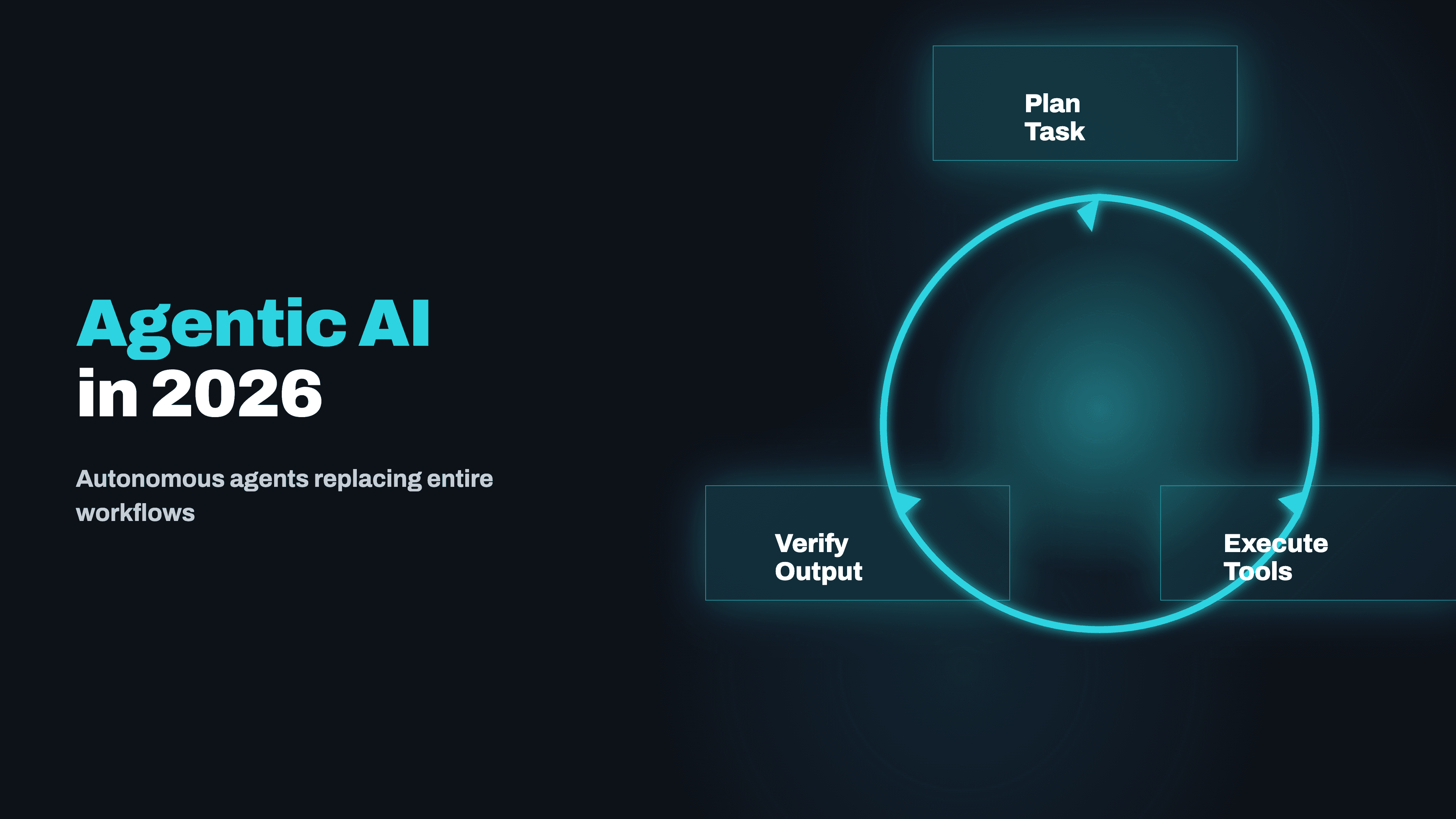
Agentic AI in 2026: How Autonomous Agents Are Replacing Entire Workflows
Agentic AI is the most over-used phrase in tech right now, and also the most consequential shift in how work gets done. Here's a ground-level view of what autonomous AI agents actually replace, what they can't, and what a real deployment looks like in 2026.
Read →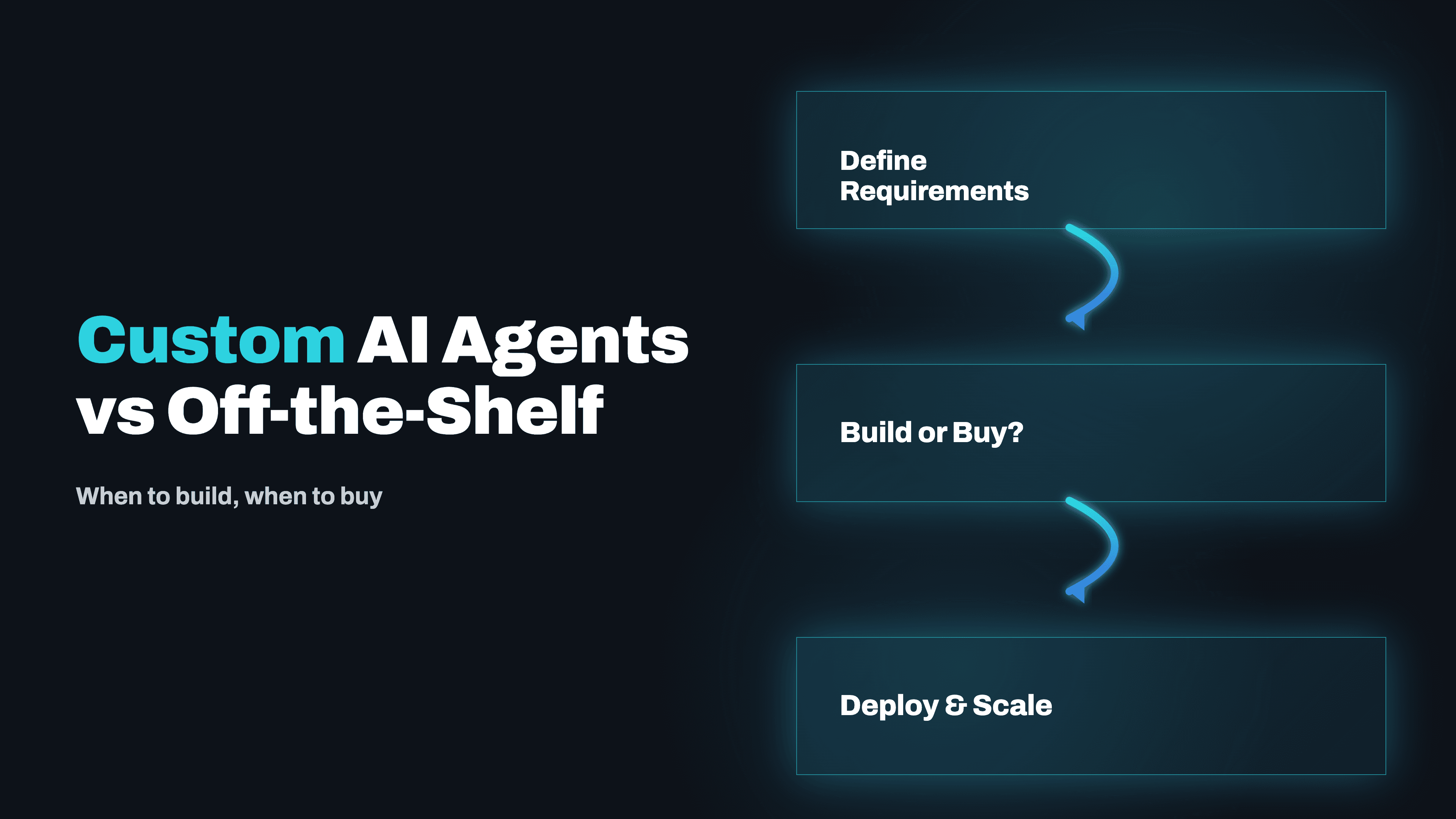
Custom AI Agents vs Off-the-Shelf: When to Build, When to Buy
Every vendor will tell you their product handles your use case. Some of them are right. Here's an honest framework for deciding when a custom AI agent is worth the investment, and when buying an existing tool is the smarter call.
Read →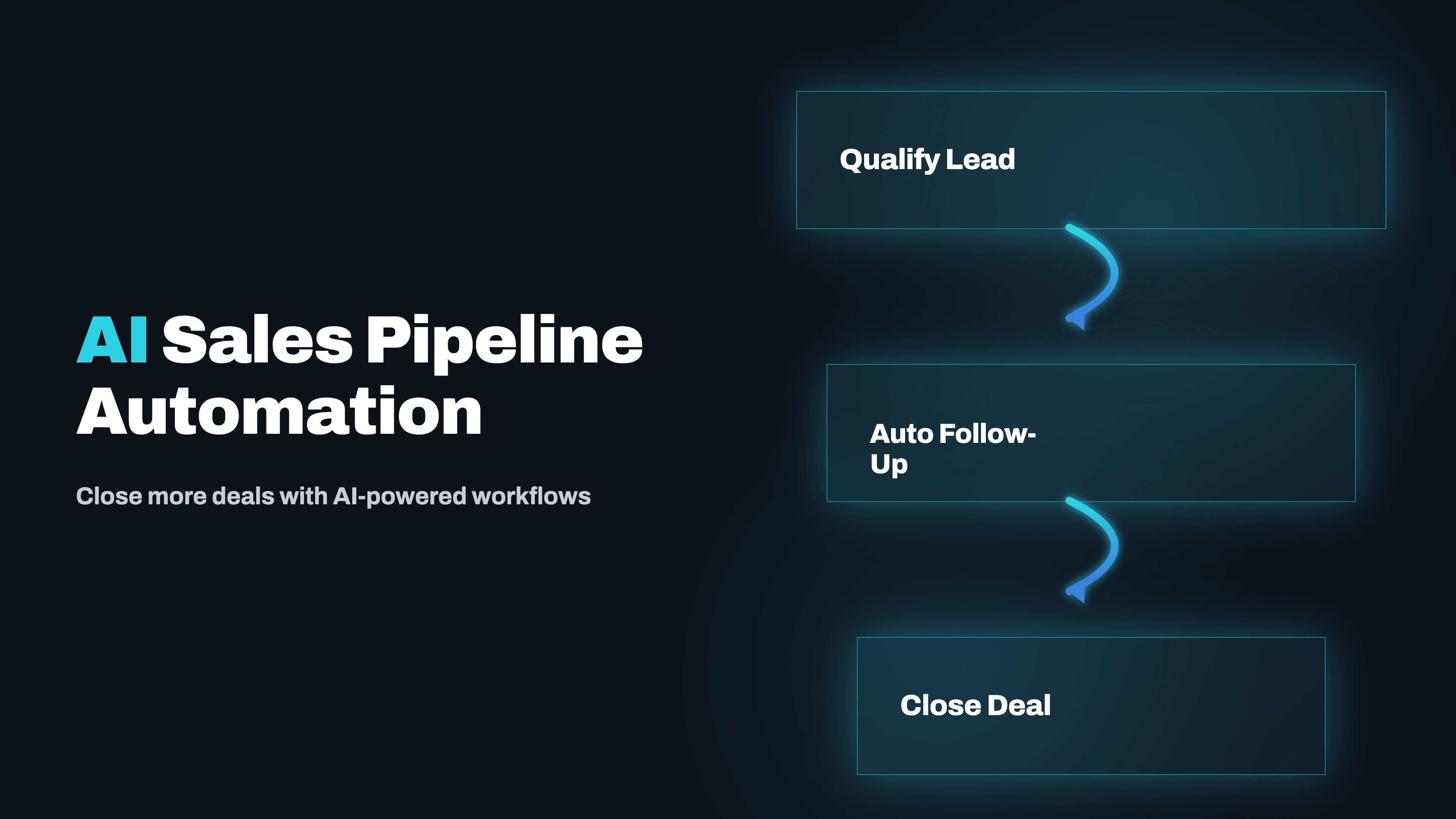
How AI Is Automating the Entire Sales Pipeline in 2026 (Not Just Lead Gen)
AI in sales used to mean a chatbot on your pricing page. In 2026, it means autonomous agents that qualify leads, personalize outreach sequences, draft proposals, handle follow-ups, and keep your CRM clean, without a rep touching it. Here's what's actually deployed and working.
Read →Want to implement this for your business?
Book a free strategy call. No commitment, no pitch deck — just a real conversation about your workflow.
Discuss Your Project →