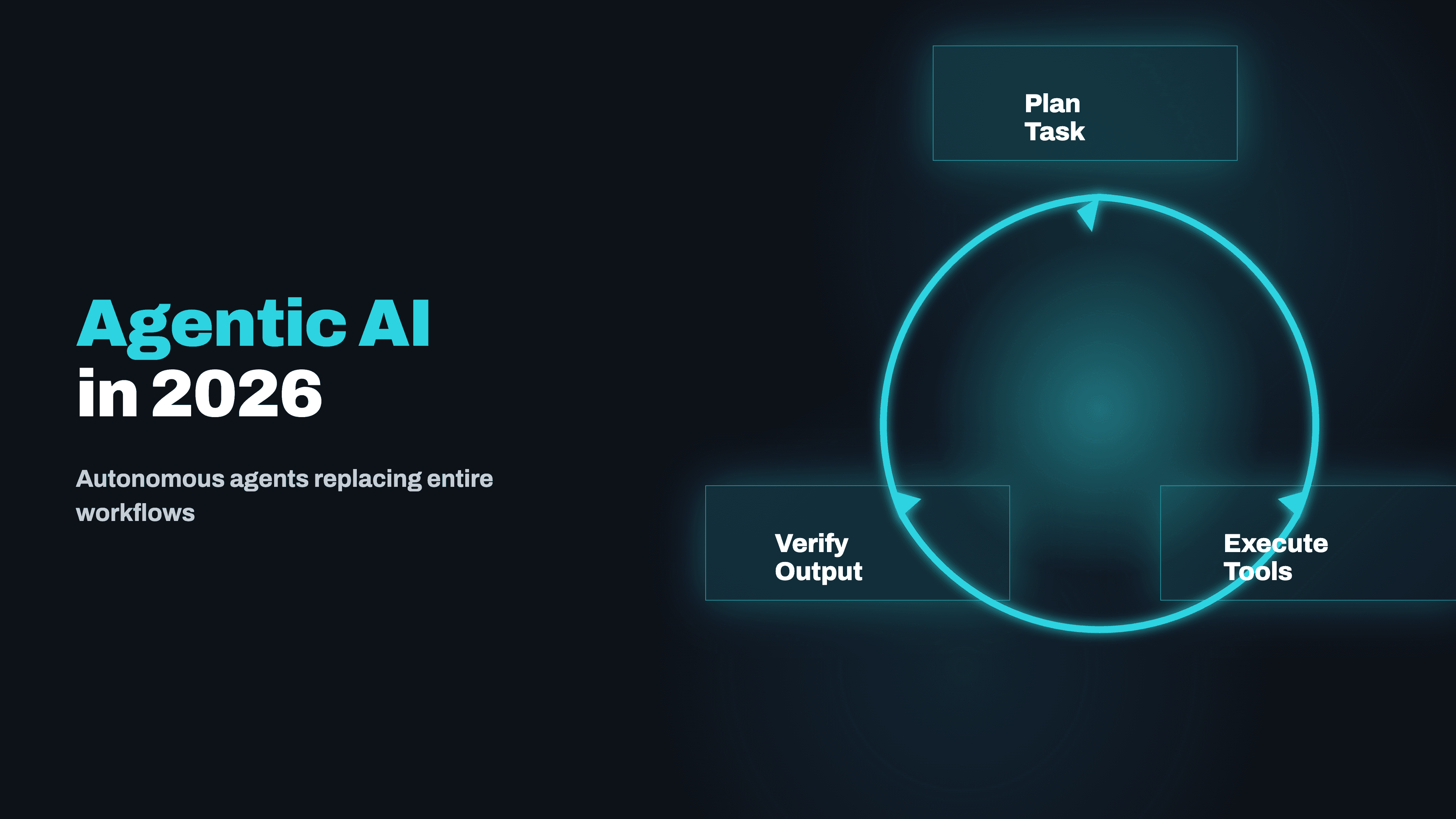
Agentic AI is the most over-used phrase in tech right now, and also the most consequential shift in how work gets done. Here's a ground-level view of what autonomous AI agents actually replace, what they can't, and what a real deployment looks like in 2026.
In 2023, 'AI agent' meant a chatbot with a few tools bolted on. In 2026, it means something closer to a junior employee who can read emails, query databases, make decisions, call external APIs, write follow-up messages, handle exceptions, and escalate when something falls outside their training, all without being asked twice. The gap between those two definitions is where most companies are getting confused, and where the real competitive advantage is being built right now.
What 'Agentic AI' Actually Means (and Why the Definition Matters)
An agentic AI system is one that can pursue a goal across multiple steps, using tools, making intermediate decisions, and adapting when earlier steps don't go as planned. The key difference from a standard LLM call is persistence and planning: the agent decides what to do next based on what it just did. A chatbot answers your question. An agent completes your task.
We've deployed agents that autonomously qualify inbound leads, route them to the right sales rep, draft a personalized first-touch email, schedule a call, and update the CRM, end to end, in under 90 seconds, for every lead that comes in.
The Three Workflow Categories Where Agents Are Winning in 2026
Not all workflows are equally suited to agentic automation. Based on our deployments in 2025 and 2026, the clearest wins are in three categories:
- ✓High-volume repetitive decision workflows: invoice matching, lead scoring, support ticket triage, compliance document review. The agent applies the same decision logic thousands of times per day and needs consistency and speed, not creativity.
- ✓Multi-system orchestration: workflows that currently require a human to pull data from System A, process it, and push it to System B and C. The human is acting as a router, not a decision-maker. Agents do this faster and without errors.
- ✓Asynchronous follow-up sequences: any workflow that involves 'check back in X days if no response' is nearly impossible to do consistently at scale with humans. Agents handle follow-up sequences across email, Slack, and CRM systems without dropping the thread.
The Architecture Behind a Production Agentic System
A production agentic AI system in 2026 isn't a single LLM call, it's an orchestrated stack. At the core is a planning layer: typically Claude 3.5 Sonnet or GPT-4o for reasoning, with a structured output format that specifies the next action. Surrounding that is a tool layer: real functions the agent can call, database queries, API calls, email sends, Slack messages, CRM updates.
The orchestration layer (we use n8n for most clients, LangGraph for complex multi-agent topologies) manages state, logs every action, and handles retries and fallbacks. A human-in-the-loop escalation path is non-negotiable: any action above a defined confidence threshold or dollar value routes to a human for approval. Every agent action is logged with full context, what the agent saw, what it decided, what it did. That audit trail is what makes agentic systems trustable in production.
Where Agentic AI Still Falls Short
Agentic AI fails predictably in specific scenarios, and knowing them is as important as knowing where it succeeds:
- ✓Novel situations: agents trained on historical patterns fail when a genuinely new situation arises. The agent will attempt a solution with false confidence.
- ✓Long-horizon tasks with many dependencies: agents accumulate errors over very long task chains. A 30-step workflow has far more failure modes than a 5-step one, and the compounding effect is real.
- ✓Unstructured relationship contexts: tasks where the right answer depends on reading subtext, political dynamics, or relationship history that isn't in the data. Agentic AI is not a replacement for human judgment in complex stakeholder situations.
What a Real Agentic Deployment Timeline Looks Like
- ✓Weeks 1–2: workflow audit and agent scope definition, mapping exact steps, decision points, data sources, and exception cases
- ✓Weeks 3–4: tool definition and integration build, connecting the agent to the systems it needs to read from and write to
- ✓Weeks 5–6: prompt engineering, output parsing, and human-in-the-loop design (the most underrated phase)
- ✓Weeks 7–8: shadow mode testing, where the agent runs alongside humans logging what it would have done without executing
- ✓Weeks 9–10: phased production rollout, starting with high-confidence, low-risk action types
- ✓Ongoing: monitoring, drift detection, and prompt refinement as edge cases surface
Measuring Agentic AI Performance in Production
Measuring whether an agentic AI system is actually working is harder than measuring a standard automation. With a rule-based workflow, you check whether it executed and whether the output is correct. With an agent, you need to measure multiple dimensions:
- ✓Task completion rate: did the agent reach a final output?
- ✓Accuracy: was the output correct according to a defined rubric?
- ✓Escalation rate: what percentage of tasks required human intervention?
- ✓Cost per task: how much did the LLM inference cost to complete this workflow?
The companies that run the most reliable agents treat these metrics as operational KPIs, reviewed weekly, with defined thresholds for when a metric triggers a prompt or architecture review. Agents that are not actively monitored drift in ways that compound over time.
Security Considerations That Are Specific to Agentic Systems
Agentic AI systems introduce security considerations that don't exist in conventional automation. Prompt injection is the most serious: a malicious actor who can control text the agent reads, a crafted email, a manipulated web page, a poisoned database record, can potentially cause the agent to take unintended actions. Production agentic systems need input sanitization layers that identify and neutralize attempts to override the agent's system prompt.
Privilege scoping matters more for agents than for conventional software: an agent that can write to your CRM, send emails, and post to Slack has a much larger blast radius than a read-only analytics pipeline. Its credentials should be scoped to the minimum permissions required. Every destructive or high-value action, deleting records, sending external communications, initiating financial transactions, should require a confirmation step or human approval threshold.
The companies winning with agentic AI in 2026 are not the ones who moved fastest, they're the ones who scoped correctly, built the audit trail, and designed the human escalation path before writing the first prompt. Tell us about your workflow and we'll scope whether an agent is the right solution and what it would realistically take to build one.
Related Articles
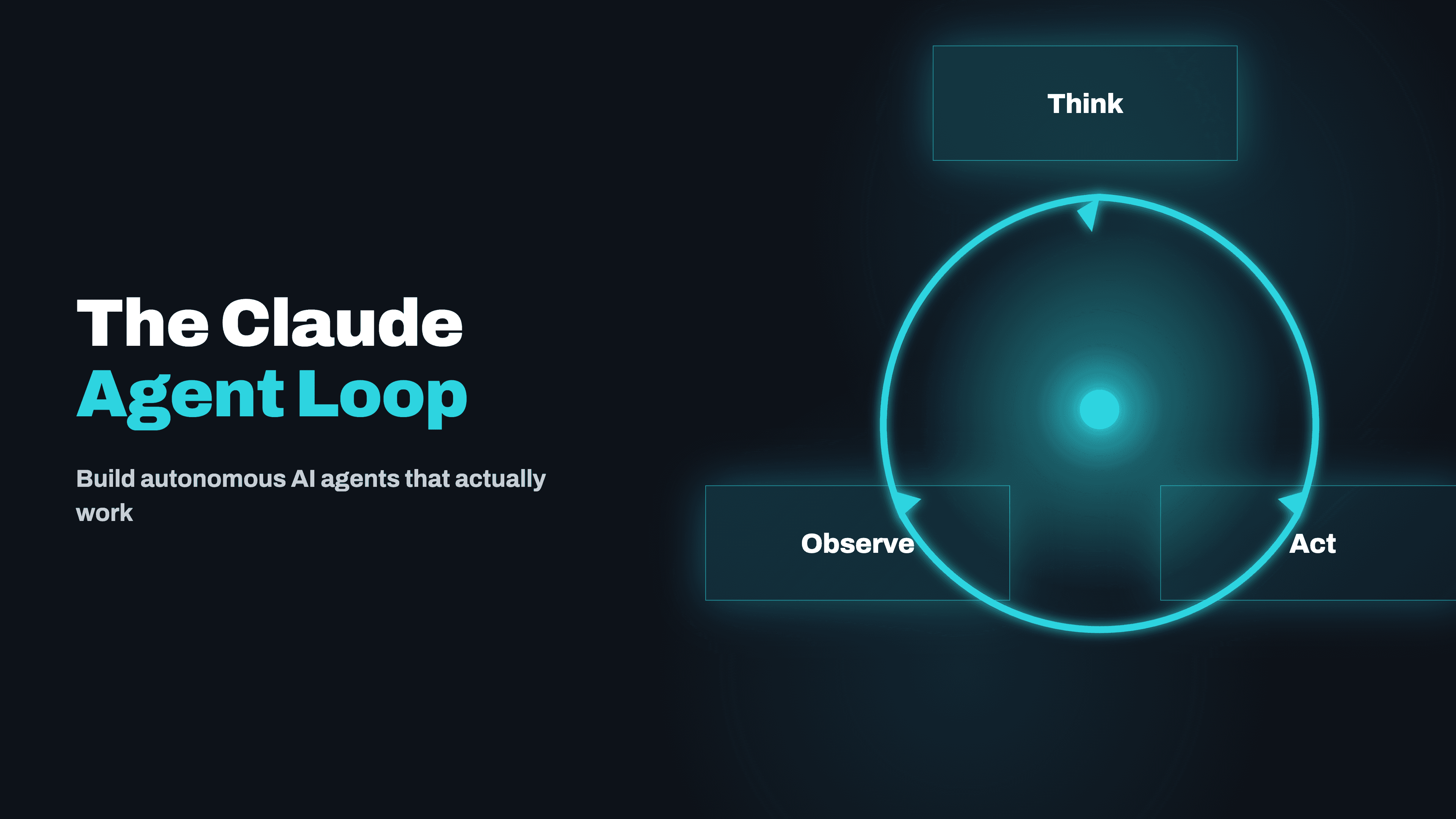
The Claude Agent Loop Explained: How to Build Autonomous AI Agents That Actually Work
Claude's agent loop is one of the most powerful patterns in applied AI right now, and one of the most misunderstood. Here's how it actually works, what makes agents built on it reliable, and how to avoid the failure modes that kill most agentic deployments.
Read →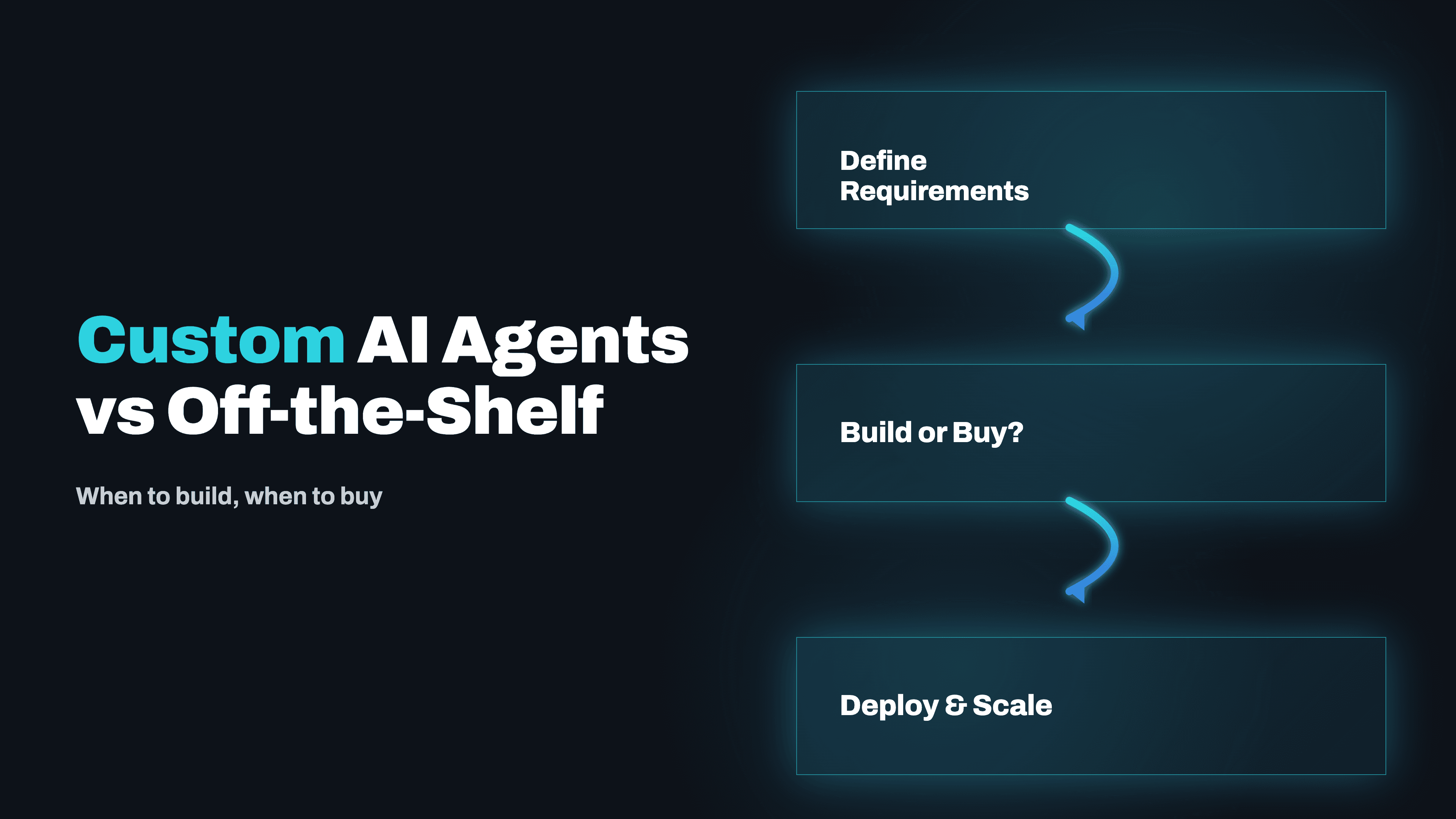
Custom AI Agents vs Off-the-Shelf: When to Build, When to Buy
Every vendor will tell you their product handles your use case. Some of them are right. Here's an honest framework for deciding when a custom AI agent is worth the investment, and when buying an existing tool is the smarter call.
Read →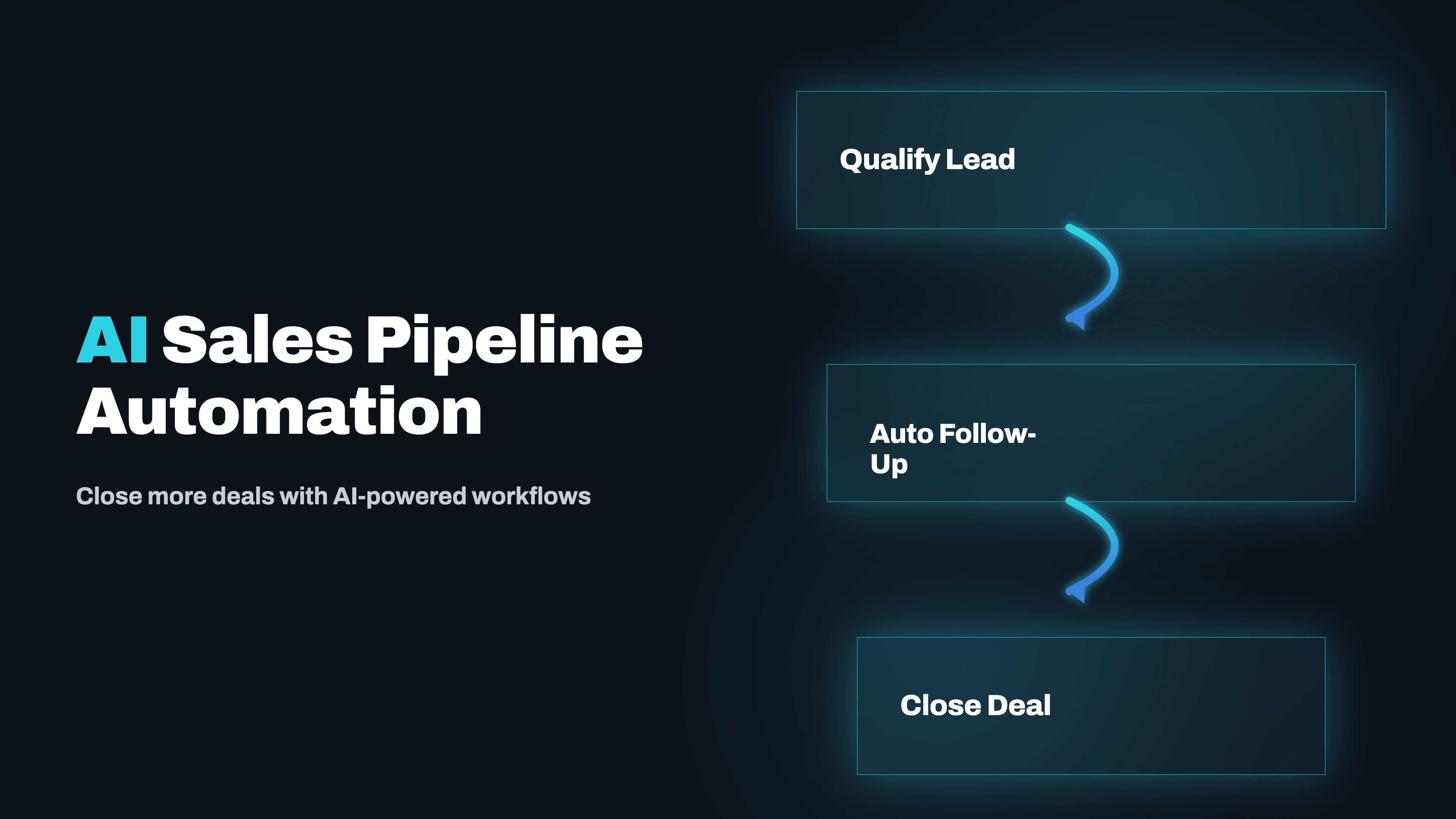
How AI Is Automating the Entire Sales Pipeline in 2026 (Not Just Lead Gen)
AI in sales used to mean a chatbot on your pricing page. In 2026, it means autonomous agents that qualify leads, personalize outreach sequences, draft proposals, handle follow-ups, and keep your CRM clean, without a rep touching it. Here's what's actually deployed and working.
Read →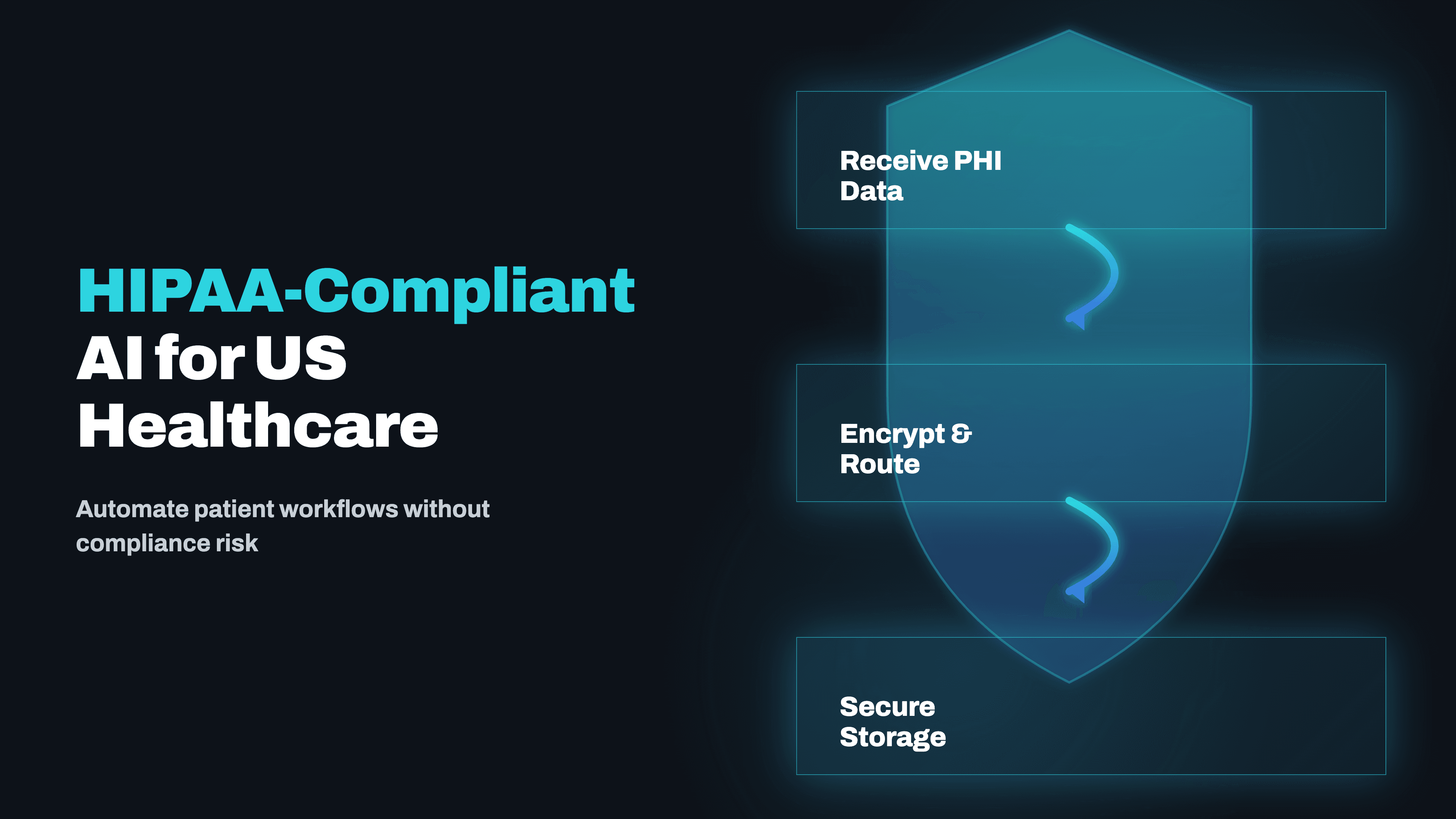
HIPAA-Compliant AI Automation for US Healthcare: What's Safe to Automate in 2026
US healthcare teams spend 40%+ of admin time on tasks that can be automated, but HIPAA compliance stops most agencies from touching it. Here's exactly how compliant automation works, which workflows are safe, and what the integration stack looks like in production.
Read →Want to implement this for your business?
Book a free strategy call. No commitment, no pitch deck — just a real conversation about your workflow.
Discuss Your Project →