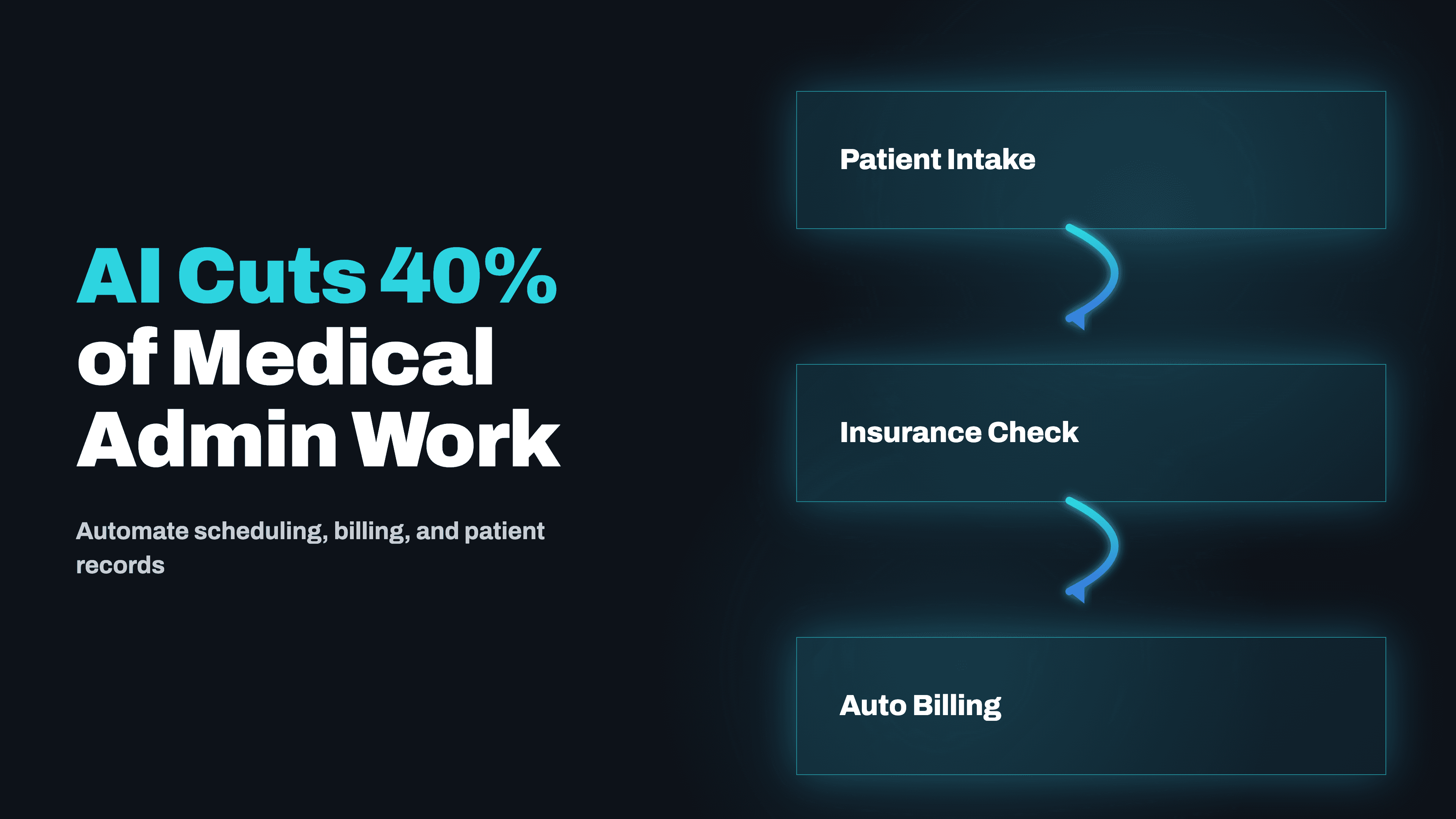
Administrative overhead is the silent killer of medical practice profitability. Here's how AI automation is reclaiming hours every day across patient intake, prior auth, appointment reminders, and billing follow-ups.
If you've worked inside a medical practice you already know the dirty secret: clinicians spend more time on paperwork than on patients. A 2024 MGMA study found that physicians spend an average of 15.6 hours per week on administrative tasks. At Kodesinc, we've built AI automation systems for healthcare clients across the US and UK, and the number we keep hitting is a 38–43% reduction in admin hours within the first 90 days.
Patient Intake: The First 10 Minutes That Break Everything
Most practices still email a PDF intake form, wait for it to come back partially filled, then have a front-desk person manually re-enter data into the EHR. For a single new patient, that sequence takes 12–18 minutes of staff time.
We replace it with an AI-driven intake flow: a conversational SMS or web form collects structured data, validates insurance eligibility in real time via API, flags missing fields, and pushes clean records directly into the EHR. Staff touchpoint drops to under two minutes for exception handling only.
Appointment Reminders Are Solved. Prior Auth Is Not.
Most practices have adopted some form of automated appointment reminders. What they haven't solved is prior authorization, the most time-consuming admin task in modern medicine. A single PA request involves pulling clinical notes, filling payer-specific forms, submitting via portal or fax, and following up manually.
We've built AI agents that handle the full PA lifecycle:
- ✓Extract relevant clinical criteria from the EHR note
- ✓Match them against payer-specific coverage rules using an LLM
- ✓Pre-fill the PA form and submit electronically where the payer API allows
- ✓Trigger a follow-up sequence if no response arrives within 48 hours
Average prior auth handling time drops from 23 minutes to under 4 minutes.
Billing Follow-Ups: Where Practices Leak the Most Revenue
Denied and underpaid claims represent 5–11% of total billed revenue for the average practice. The denial isn't the problem, the lack of a systematic follow-up workflow is.
We build AI pipelines that parse ERA/EOB files, categorize denials by reason code, prioritize by dollar value, and draft appeal letters with supporting documentation pulled from the patient record. Appeals that used to sit in a queue for two weeks get submitted within 48 hours.
One orthopedic group we work with recovered $340,000 in previously written-off claims in their first quarter post-deployment.
What the Integration Actually Looks Like
Healthcare automation lives and dies on EHR integration. We work primarily with HL7 FHIR APIs (Epic, Athena, Modernizing Medicine), direct database connections where permitted, and webhook-based event triggers.
The automation layer sits on top: n8n for orchestration, Python microservices for LLM calls, and Twilio or Vonage for patient-facing SMS. Every workflow is designed so a human can intercept at any step. AI handles the 80% of cases that follow predictable patterns; staff handles the 20% that need judgment.
The Honest Caveat: This Isn't Plug-and-Play
Healthcare AI automation is not a SaaS subscription you turn on. HIPAA compliance, BAA agreements, EHR sandbox access, and clinical workflow mapping all need to happen before a single automation goes live. Our typical healthcare engagement is 6–8 weeks from kickoff to production, with a 2-week discovery phase that's non-negotiable.
Results: What These Numbers Look Like in Production
- ✓Patient intake: 85% reduction in manual data entry per new patient
- ✓Prior authorization: average handling time from 23 min to under 4 min
- ✓Appointment no-show rate: drops 15–22% with AI-driven reminder sequences
- ✓Billing follow-up: claims worked within 48 hours instead of 10–14 days
Choosing the Right EHR Integration Approach
The modern standard is HL7 FHIR APIs. Epic's App Orchard, Athenahealth's API platform, and Modernizing Medicine all expose FHIR R4 endpoints that allow authorized third-party systems to read and write patient data in structured formats, appointments, clinical notes, coverage information, and claim data without screen-scraping or fragile file exports.
Not every practice has FHIR API access enabled. Smaller practices on older EHR versions sometimes require direct database connections with the EHR vendor's written permission, or middleware platforms like Rhapsody or Mirth Connect that translate between HL7 v2 messages and modern APIs. We assess your EHR's API capabilities during discovery and design the integration architecture before committing to a timeline.
The 90-Day Implementation Timeline
Healthcare automation projects that fail are almost always the ones that compressed the timeline and skipped discovery. Our standard engagement runs 6–8 weeks:
- ✓Weeks 1–2: workflow mapping, EHR sandbox access setup, BAA execution with every vendor in the stack
- ✓Weeks 3–6: build, testing with synthetic data, real data validation with clinical staff review at each step
- ✓Weeks 7–8: production deployment with monitoring, 48-hour hyper-care, and staff training on exception handling
Staff Adoption: The Make-or-Break Factor
The automation that the clinical or admin team doesn't trust will not be used, regardless of how well it works technically. Every automation we build for healthcare clients includes an exception inbox where the 5–10% of flagged cases are surfaced for human review with enough context to make a fast decision.
We run structured handoff training with the actual staff who will use the system, working through real examples including edge cases. We also build a monitoring dashboard so the practice administrator can see automation performance, intakes processed, cases flagged, exception reasons. Adoption follows visibility.
If your practice is still running administrative workflows the way it did five years ago, you're paying for it in staff burnout and revenue leakage. Book a free workflow audit and we'll show you exactly where your biggest time and revenue leaks are before we write a single line of code.
Related Articles
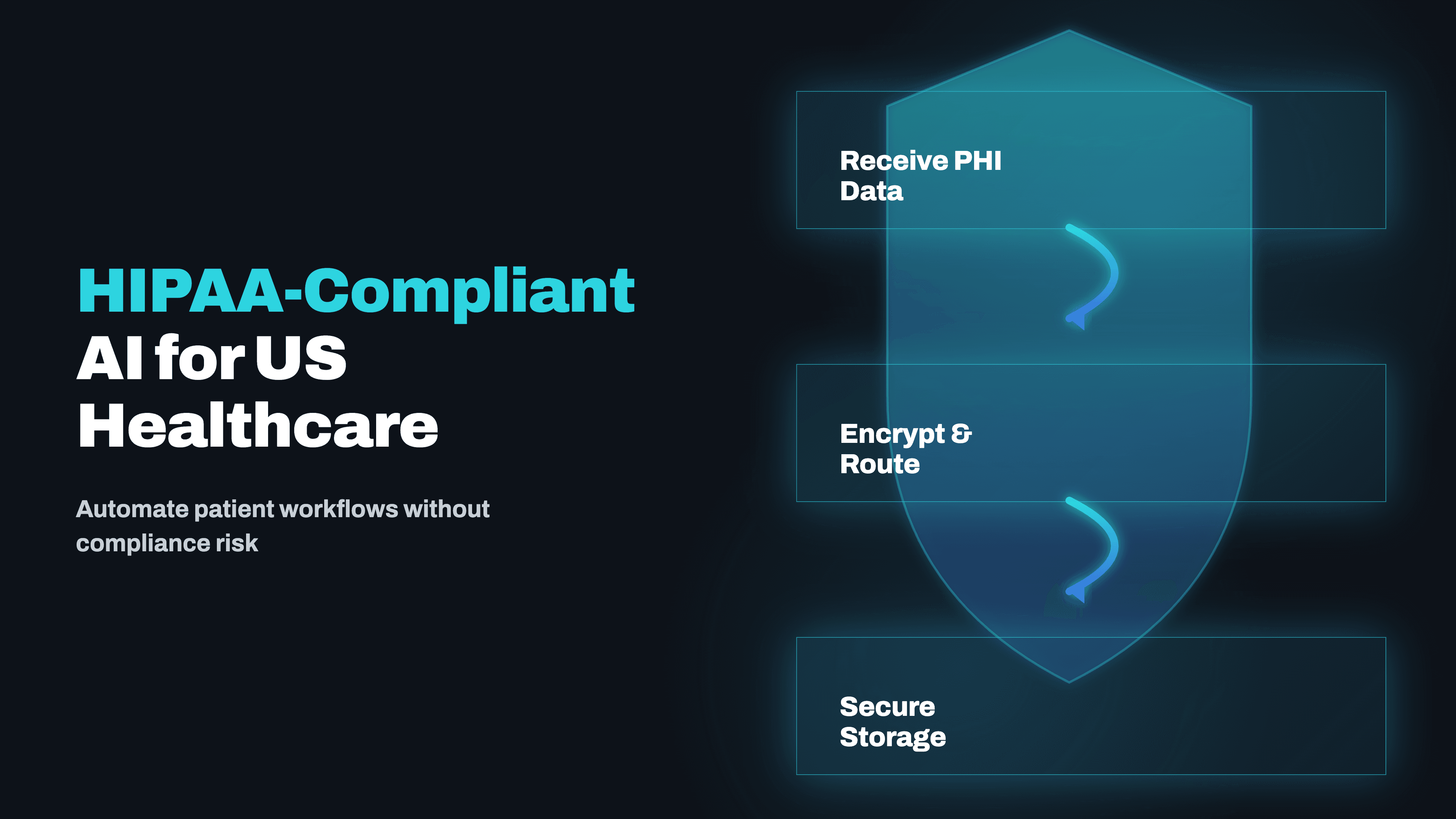
HIPAA-Compliant AI Automation for US Healthcare: What's Safe to Automate in 2026
US healthcare teams spend 40%+ of admin time on tasks that can be automated, but HIPAA compliance stops most agencies from touching it. Here's exactly how compliant automation works, which workflows are safe, and what the integration stack looks like in production.
Read →
Custom AI Agents vs Off-the-Shelf: When to Build, When to Buy
Every vendor will tell you their product handles your use case. Some of them are right. Here's an honest framework for deciding when a custom AI agent is worth the investment, and when buying an existing tool is the smarter call.
Read →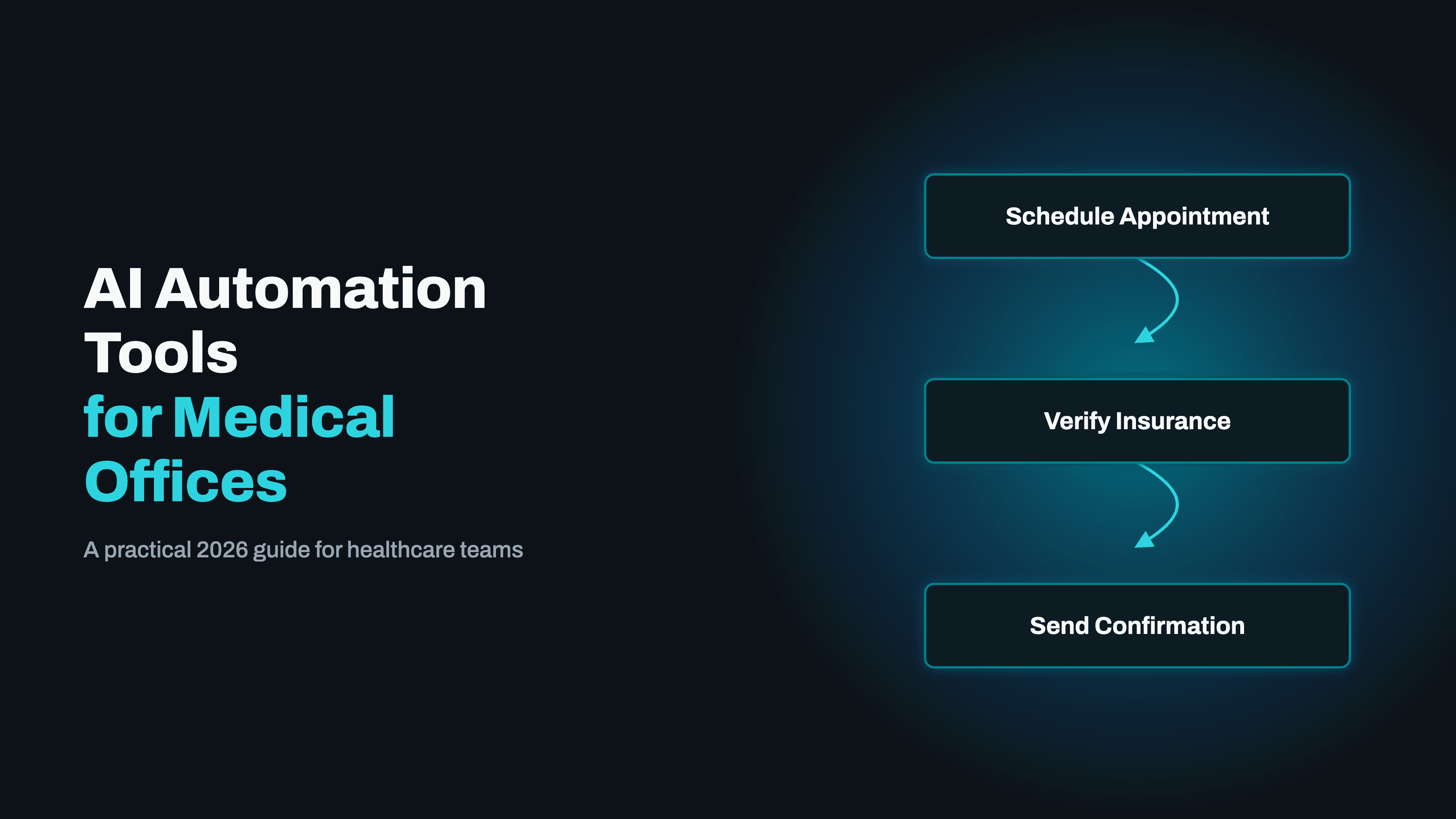
AI Workflow Automation Tools for Medical Offices: A Practical 2026 Guide
Medical offices are losing 20-30% of staff time to administrative tasks that AI workflow automation can handle, patient intake, billing, scheduling, referrals, and EHR data entry. Here's what's working in production in 2026 and how to implement it compliantly.
Read →
HIPAA Compliant Workflow Automation: Architecture Guide for Healthcare
Most healthcare workflow automation fails HIPAA compliance not because the tool is wrong but because the architecture is wrong. Here is what HIPAA actually requires of automated systems, which platforms can be made compliant, and how to design workflows that your DPO and legal team can sign off on.
Read →Want to implement this for your business?
Book a free strategy call. No commitment, no pitch deck — just a real conversation about your workflow.
Discuss Your Project →