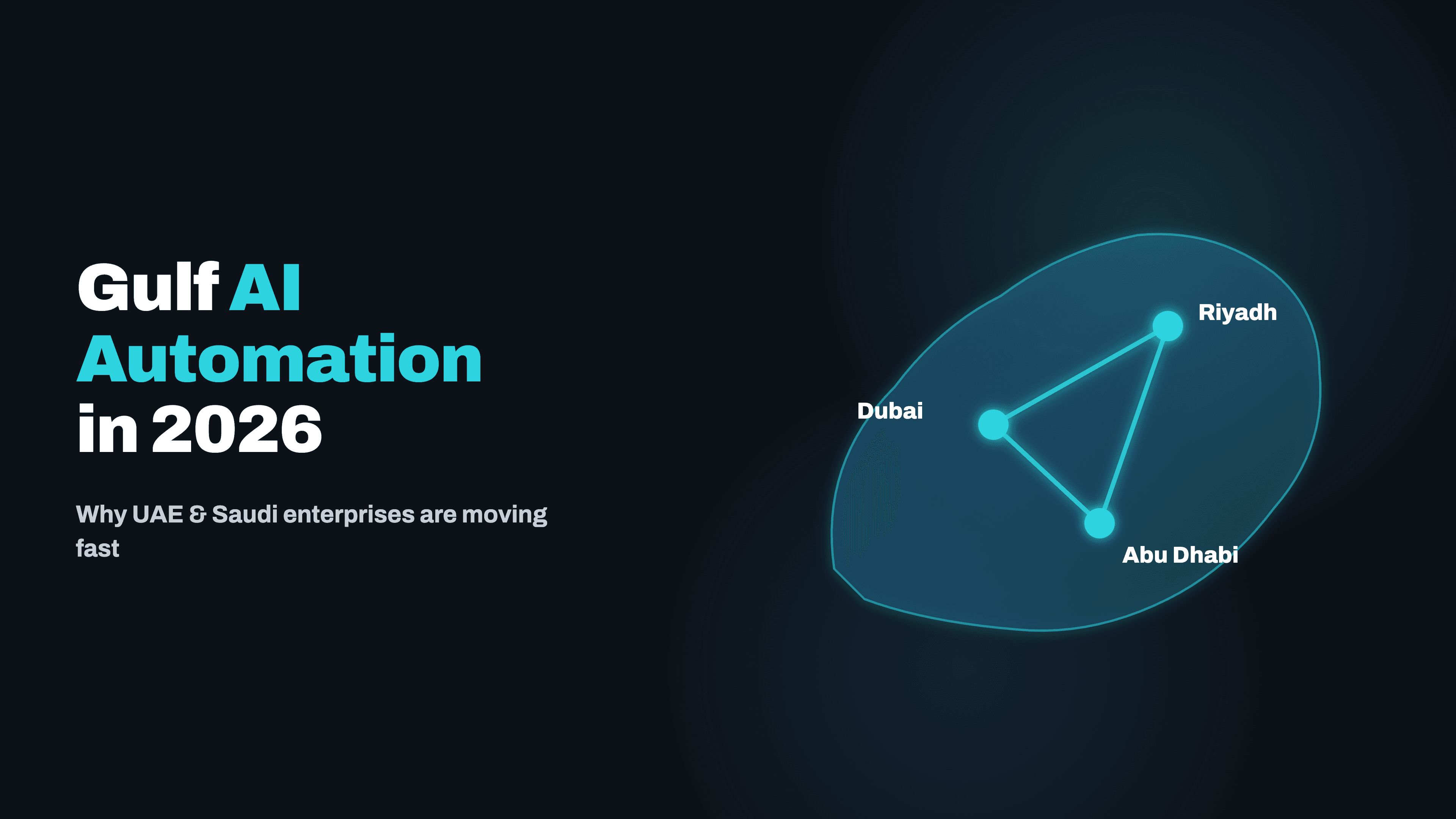
The pace of enterprise AI adoption in the Gulf has shifted dramatically in the past 18 months. Here's what's actually driving it, and what Kodesinc is building for clients in UAE, Saudi Arabia, and across the GCC.
Eighteen months ago, most enterprise AI conversations in the Gulf were still in the 'exploring' phase: executive interest, pilot budgets, no production deployments. In 2026, that's changed. Kodesinc now has active engagements with clients in Dubai, Riyadh, Abu Dhabi, and across the GCC, and the shift from evaluation to execution is real. Here's what's driving it.
Vision 2030 Is Creating Genuine AI Urgency
Saudi Arabia's Vision 2030 isn't abstract policy for the enterprises we work with, it's a business reality with deadlines. Government procurement, licensing, and partnership frameworks increasingly favor organizations that can demonstrate digital transformation progress. The National Strategy for Data and AI has allocated $20 billion toward AI infrastructure, creating a cascade: enterprises that want government contracts or regulatory approvals have a concrete reason to accelerate their AI capabilities. We're seeing this most acutely in logistics, healthcare, and financial services.
UAE's Positioning: The Regional AI Hub
The UAE is positioning Dubai and Abu Dhabi as the AI hub for the broader MENA region. The DIFC and ADGM free zones have made it genuinely easier to incorporate AI companies and structure cross-border data agreements. The availability of Tier-3 and Tier-4 data centers, combined with relatively liberal data localization requirements compared to Saudi Arabia, makes the UAE the natural choice for AI infrastructure that serves the wider region. Several of our clients use the UAE as the deployment base for AI systems serving customers across multiple Gulf markets.
What Gulf Enterprises Are Actually Automating
The use cases we're deploying are more specific than the 'AI transformation' language you see in conference presentations:
- ✓Logistics: automated shipment exception handling, AI-driven customs documentation, and demand forecasting pipelines
- ✓Healthcare: patient triage automation, insurance pre-authorization workflows, and multilingual patient communication agents handling Arabic and English without separate systems
- ✓Financial services: KYC document processing, regulatory reporting automation, and AI-assisted credit memo drafting for corporate banking teams
The Challenges Specific to the Region
Gulf AI deployments have challenges that don't appear in Western market playbooks. Arabic language processing is significantly more complex than English, morphological richness, dialectal variation, and the mix of Arabic and transliterated English in business communications create real problems for off-the-shelf NLP models. We use a combination of fine-tuned Arabic language models and careful prompt engineering to handle this. Data localization requirements in Saudi Arabia mean some cloud-agnostic architectures need to be restructured to keep certain data in-kingdom.
What We're Building and What's Next
- ✓Multilingual AI agents handling Arabic-English workflows for customer service, HR, and compliance teams
- ✓Document intelligence systems for Arabic contract review and regulatory filing
- ✓Supply chain automation connecting Gulf logistics platforms with international shipping APIs
- ✓Healthcare AI deployments compliant with Saudi Health Council and UAE DOH data requirements
- ✓Enterprise LLM integrations with on-premise deployment options for data-sensitive clients
Data Residency and Sovereignty Considerations
Data residency is not a checkbox in Gulf enterprise deployments, it's a live commercial risk. Saudi Arabia's PDPL and the UAE's Federal Decree-Law on Personal Data Protection both impose requirements on where personal and sensitive business data can be processed. For automation systems handling employee records, customer financial data, or government-related information, cloud-agnostic design is essential.
We architect Gulf deployments on AWS Riyadh, Azure UAE North, and on-premise infrastructure depending on the client's regulatory profile. For enterprises working with Saudi government data specifically, in-kingdom processing is the only architecturally defensible choice, we design every system with that constraint as a first principle, not an afterthought.
How to Evaluate an AI Automation Partner for Gulf Deployments
Not all automation agencies that claim Gulf experience have actually shipped production systems in the region. The questions that reveal real capability:
- ✓Can you show a deployed system processing Arabic-language content in production?
- ✓Have you executed engagements under Saudi or UAE data residency constraints?
- ✓Do you have in-kingdom infrastructure experience, or only cloud-based deployments?
- ✓Can you work across GCC time zones with proper support coverage?
The Integration Landscape Specific to Gulf Enterprise Systems
Gulf enterprise automation has a specific integration landscape that differs meaningfully from the Western context. Oracle Fusion and SAP S/4HANA dominate enterprise ERP in the region. Government system integrations, connecting to Mudad for Saudization compliance, Etimad for procurement, or GOSI for social insurance, require specific authentication and data format handling. Local payment gateways, Mada in Saudi Arabia and network-native schemes in the UAE, have their own API patterns.
We have production experience with all of these systems and design automation architectures that connect them reliably at the data level. For Gulf enterprises evaluating automation agencies, asking for specific experience with your ERP system and your relevant government compliance integrations is the fastest way to separate vendors with real regional capability from those with general-purpose automation expertise.
The Gulf AI market in 2026 is not a future opportunity, it's a current one. Kodesinc has active deployments across the UAE, Saudi Arabia, the UK, and the US. Let's talk about your automation goals, we understand the regulatory environment, the language requirements, and the integration landscape.
Related Articles
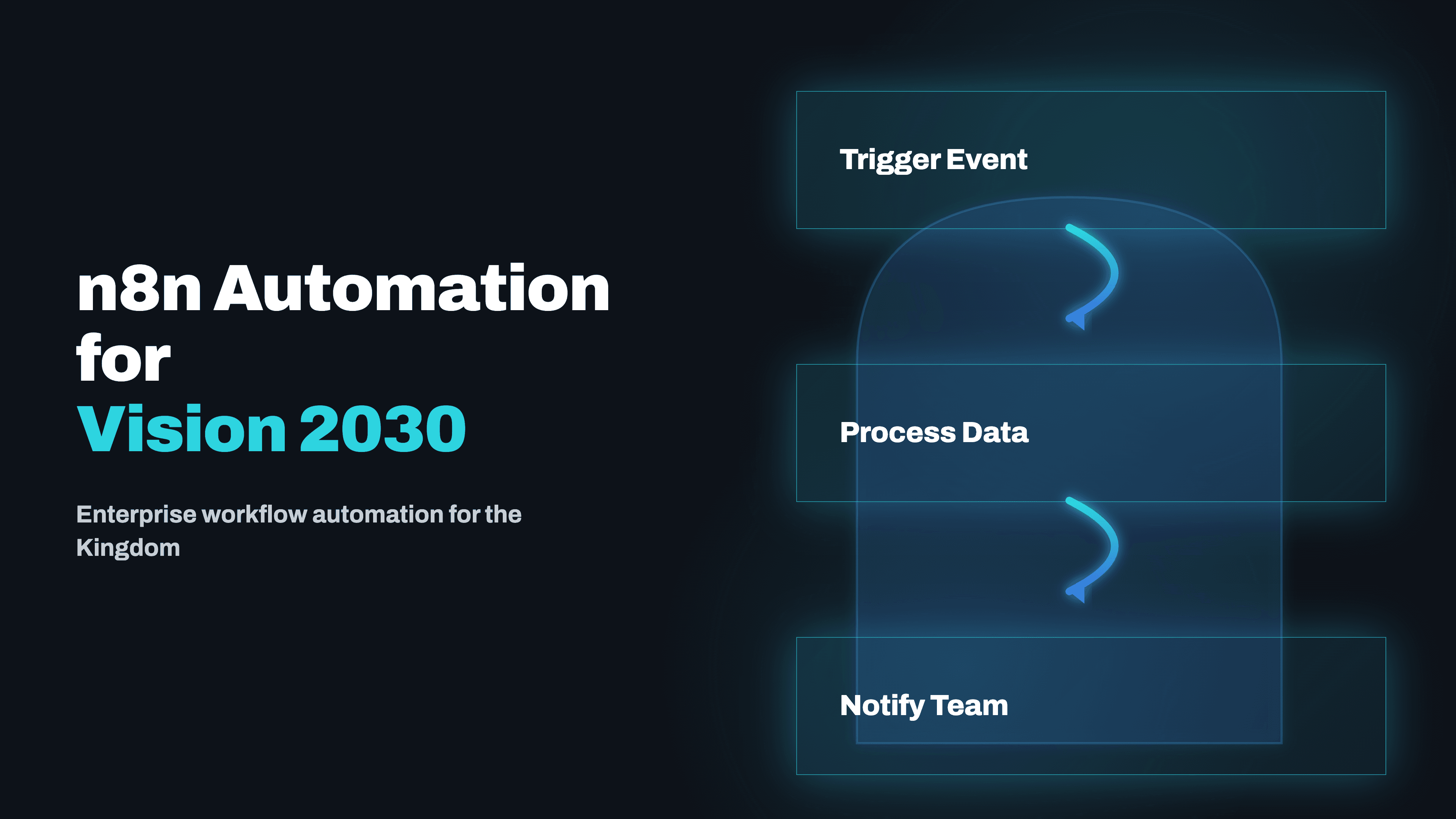
n8n Automation for Saudi Enterprises: Aligning with Vision 2030
Vision 2030 isn't just a government initiative, it's creating real procurement and compliance pressure for Saudi enterprises to show digital transformation progress. Self-hosted n8n is the right tool for Saudi deployments: no data leaves the kingdom, no per-operation cloud pricing, full control.
Read →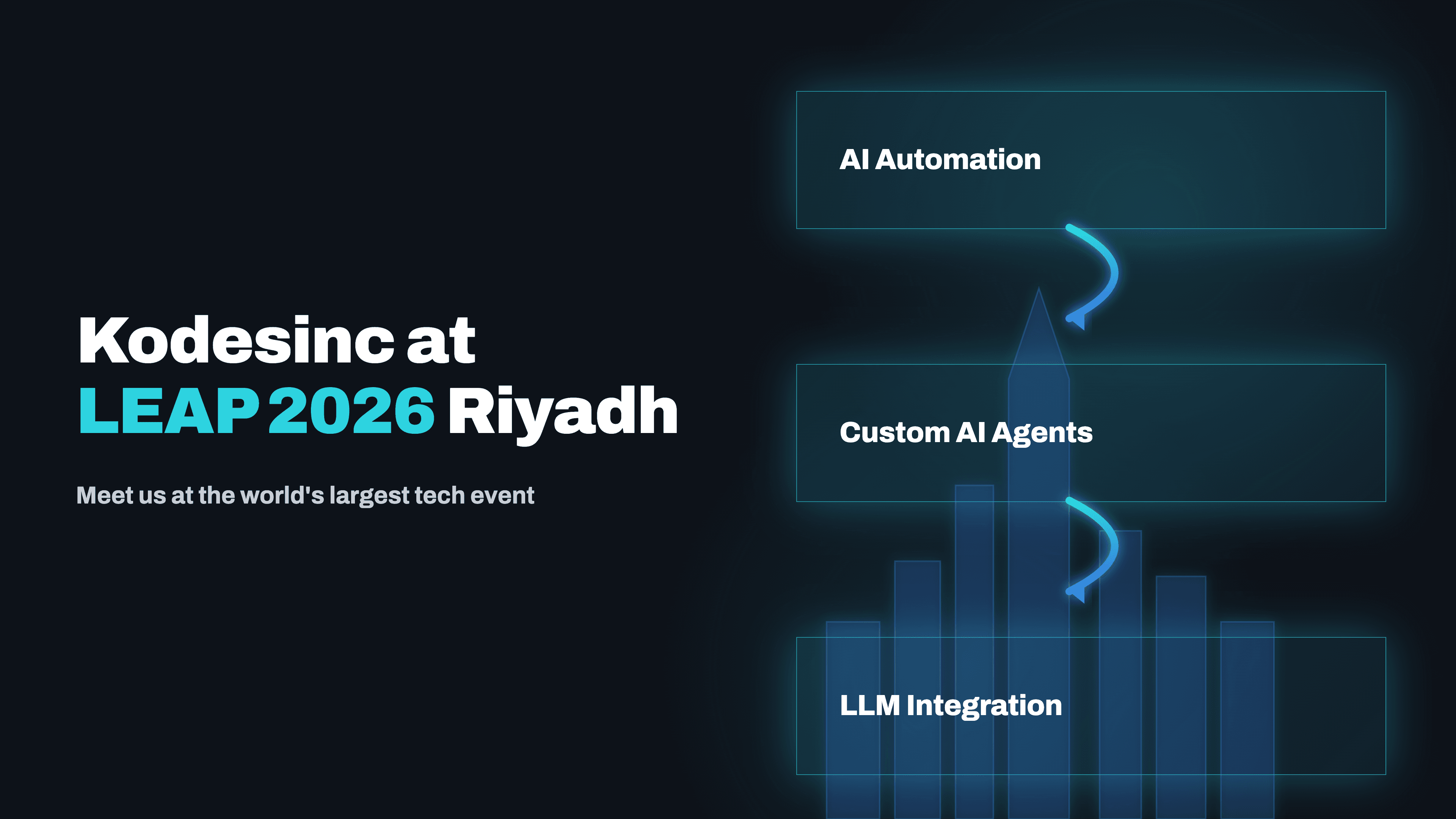
Kodesinc Is Coming to LEAP 2026 in Riyadh
Kodesinc is heading to Riyadh for LEAP 2026, the largest technology and AI event in the MENA region. Here's what we're bringing, who we want to meet, and what we're seeing in the Saudi AI automation market right now.
Read →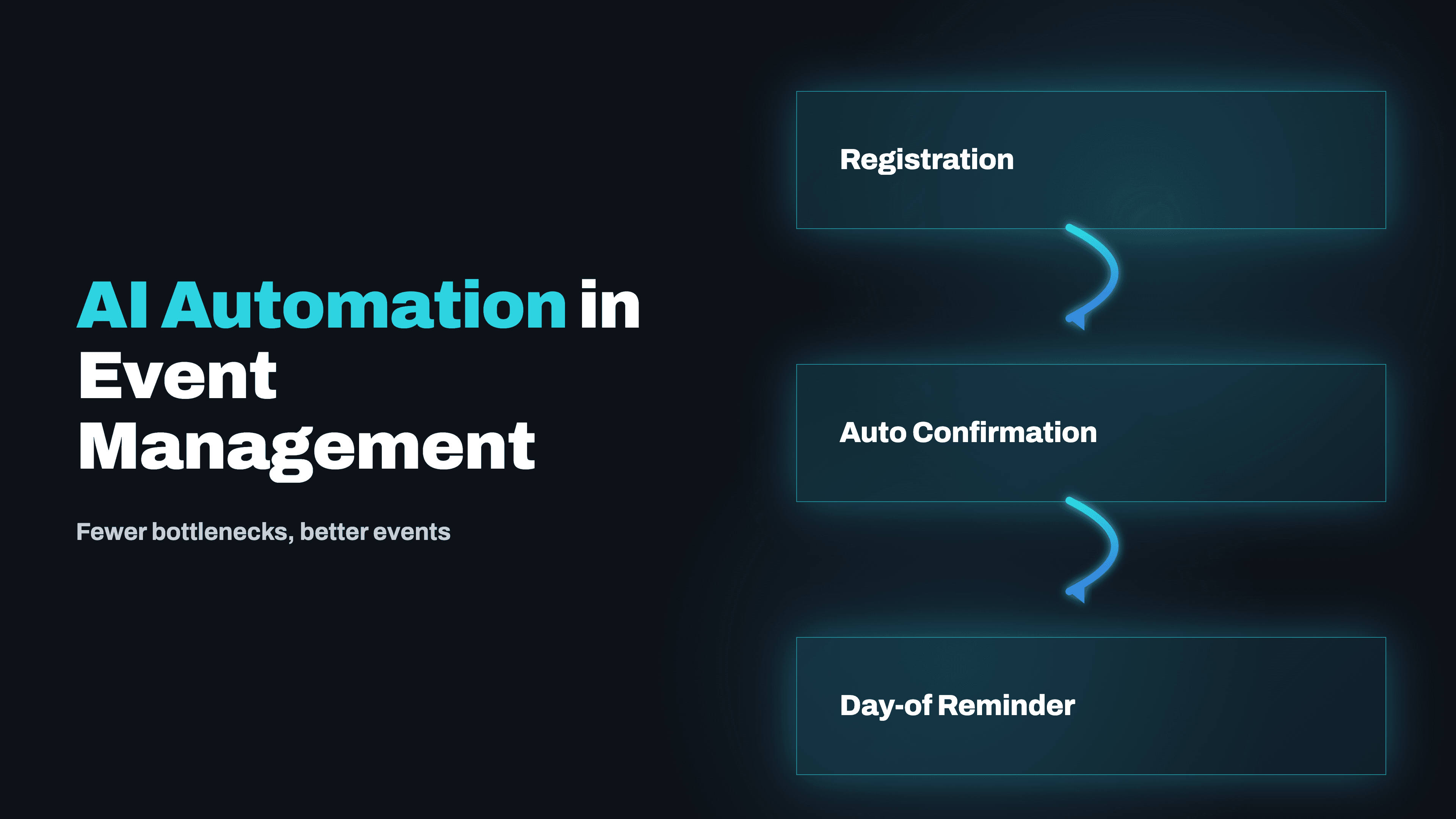
AI Automation in Event Management: Fewer Bottlenecks, Better Events
Event management runs on coordination, hundreds of moving pieces, tight deadlines, and zero tolerance for dropped balls. Here's what AI automation is actually changing, and not in the generic chatbot way you've heard about.
Read →
AI Workflow Automation for UK Businesses: 2026 Guide
UK businesses face specific pressures in 2026, rising labour costs post-NLW increase, GDPR compliance requirements, and a skills gap in technical talent. AI workflow automation is the practical answer. Here's what's working, what's compliant, and how Kodesinc builds it.
Read →Want to implement this for your business?
Book a free strategy call. No commitment, no pitch deck — just a real conversation about your workflow.
Discuss Your Project →